

Top Art Trends for 2026: What’s Shaping the Future of Creativity

Art, just like everything else in life and on this planet, continually evolves; year after year, decade after decade, and so on. And as the world turns (no pun intended for those soap opera lovers), art catalyzes change, influencing movements, not only in the art realm but in other sectors such as environmental, political, technological, and social movements. With the constant buzz surrounding artificial intelligence and the widespread use of AI in our everyday lives, it comes as no surprise that this has caught trend with the art community as well.
We saw a glimpse of what the future might hold back in early 2018 with the rise of NFTs hitting mainstream art markets. In fact, during Miami Basel 2019, they dedicated a whole section to NFT art, offering a stage for digital art and its creators. The same art fair that showcased the great artists throughout the centuries was juxtaposed with this nuanced wave of technology–and it was wild to witness!
Fast forward to today, art and technology have merged for the long run, making this the turning point for art. In this blog, we explore the emerging art trends of technological movements, innovations, creative returns, and cultural shifts for 2026.
Digital and AI-Generated Art Take Center Stage
AI has been the hot topic for a couple of years. Not only has it dominated the tech industry, but it has also become an integral part of our everyday lives. So, it’s no surprise, inevitability, that the art world would start to see some artists utilizing it in their creative processes. And if you’re rolling your eyes by now, we understand. There have been plenty of debates about whether using any AI tools to create art, be considered art. With the AI tools like DALL·E, Midjourney, and new Canva AI features, it’s a question of whether this is the newest art trend.
It is clear that AI is here to stay, and artists are riding the wave. We saw this back in 2021 with the rise of NFTs and artists like Beeple’s Everydays: The First 5,000 Days–which sold at Sotheby’s for 69.3 million USD! Not only was the most expensive piece of art sold, but it also thrust digital art into the mainstream world.
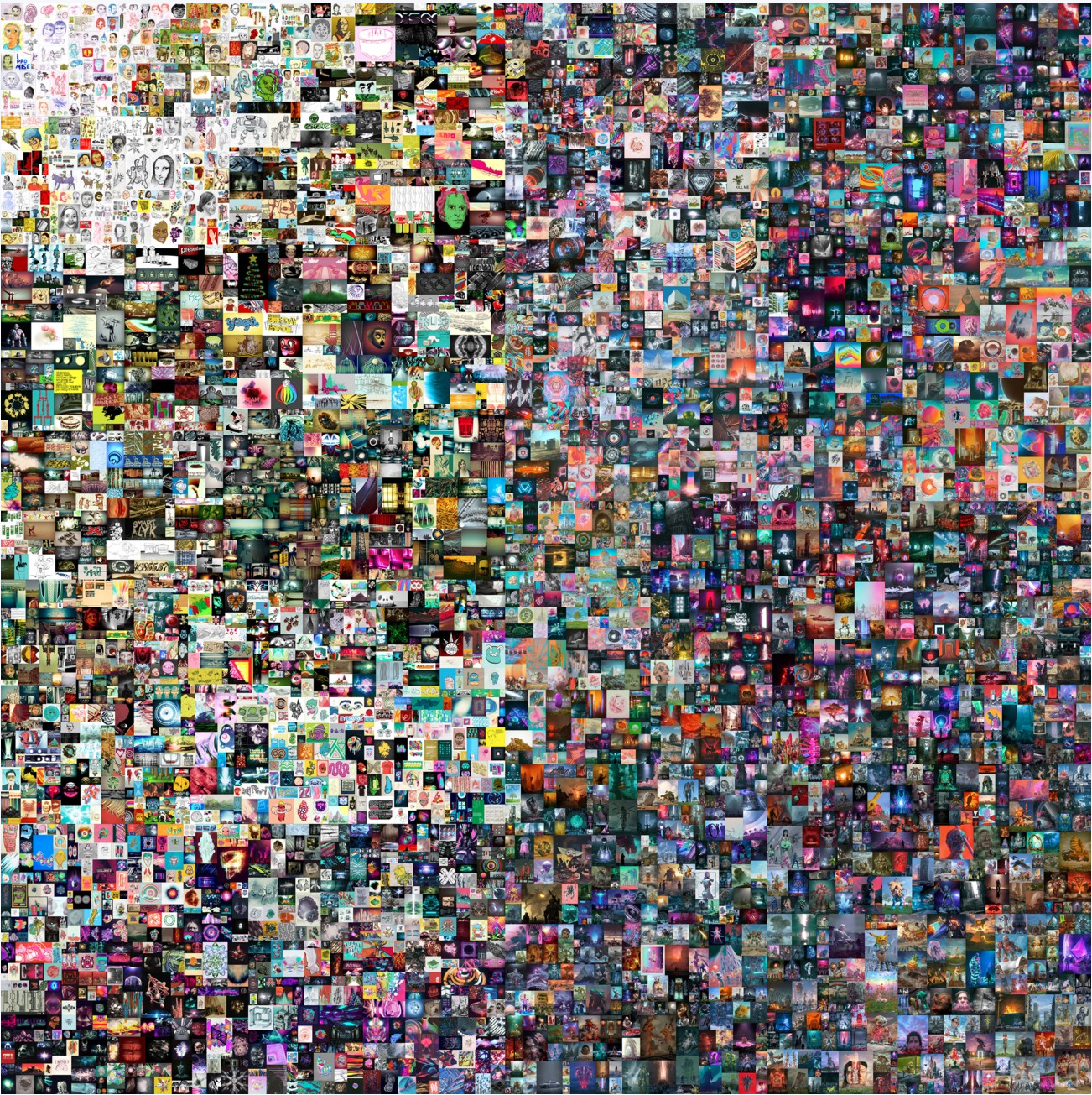
Everydays: The First 5000 Days
NFT, minted on 16, February 2021 by Beeple
Contemporary artists, such as Refik Anadol, who is famously known for his use of data as his primary medium, transform said data to develop large-scale visual narratives and site-specific installations. His works can be seen at the Museum of Modern Art (MoMA). But Andaol isn’t the only artist using AI to create interesting art. If you’re one of the many who noodle around on Instagram, then you might have seen Clair Silver’s images. Her innovative blend of text-to-image AI and digital collage creates motifs that are beautifully executed–and resemble a little bit of a digitalized Gustav Klimt visual.
The Botto Project is another interesting case study. Defined as a decentralized autonomous artist on its website, it is a humanless AI artist. It performs similarly to other LLMs by scanning hundreds of art pieces across the web to generate new art images, but its capabilities extend further than that. “Botto” is also a self-curatorial machine, which means it produces the digital artwork and also curates it. The Botto Project has been featured in several publications, group exhibitions and even solo exhibitions with great success.
These artists give us insight by utilizing AI in any capacity, which is one of the many AI art trends we will continue to watch in 2026. The digital art movement will continue to improve and evolve as we move into the years to come.
Eco-Art Movement and Sustainability in Creative Practice
Art has always been a vehicle to expose sensitive conversations, whether it be political, social, or environmental. With the U.S. backing out of the Paris Agreement earlier this year (for the second attempt), activists and artists are continuing the fight. But as for artists, turning their passion into a political stance by choosing unorthodox materials to unmask corporate greed is just what this world needs. In case you missed what's currently going on in the world, plastic has become an increasing problem, not just environmentally, but it is now known that it vastly impacts our health. And let’s not forget about fracking, gas emissions, deforestation, and other issues that contribute to the climate crisis…but we can save those topics for a later time.
Sustainable art has been popping up frequently, and I’m glad to see this making headway into the art world. To say that artists are just now becoming aware of environmental change would be a lie. There have always been artists throughout the decades who chose to create with recycled materials, but not the majority of artists. In recent years, we’ve been noticing this trend increase, with more artists using eco-friendly materials and producing sustainable projects.
Artists like Albano Hernandez, Liz Larner, and Artur Bordaloare turning their trash into art. Each of these artists uses recycled plastics as their choice medium to create a narrative of global consumption to onlookers. But these are just a few examples of artists who choose to use trash for their treasure. Other forms of sustainable art trends are those who make their medium, opting out of consumerism. For example, going back to the basics and producing natural dyes, or making paint pre-industrial revolution era, even creating biodegradable installations. We can see this in action with Andy Goldsworthy, who uses this to his advantage by taking natural materials found in nature to enhance a specific item, consciously not intervening with the natural landscape to create a beautiful installation.
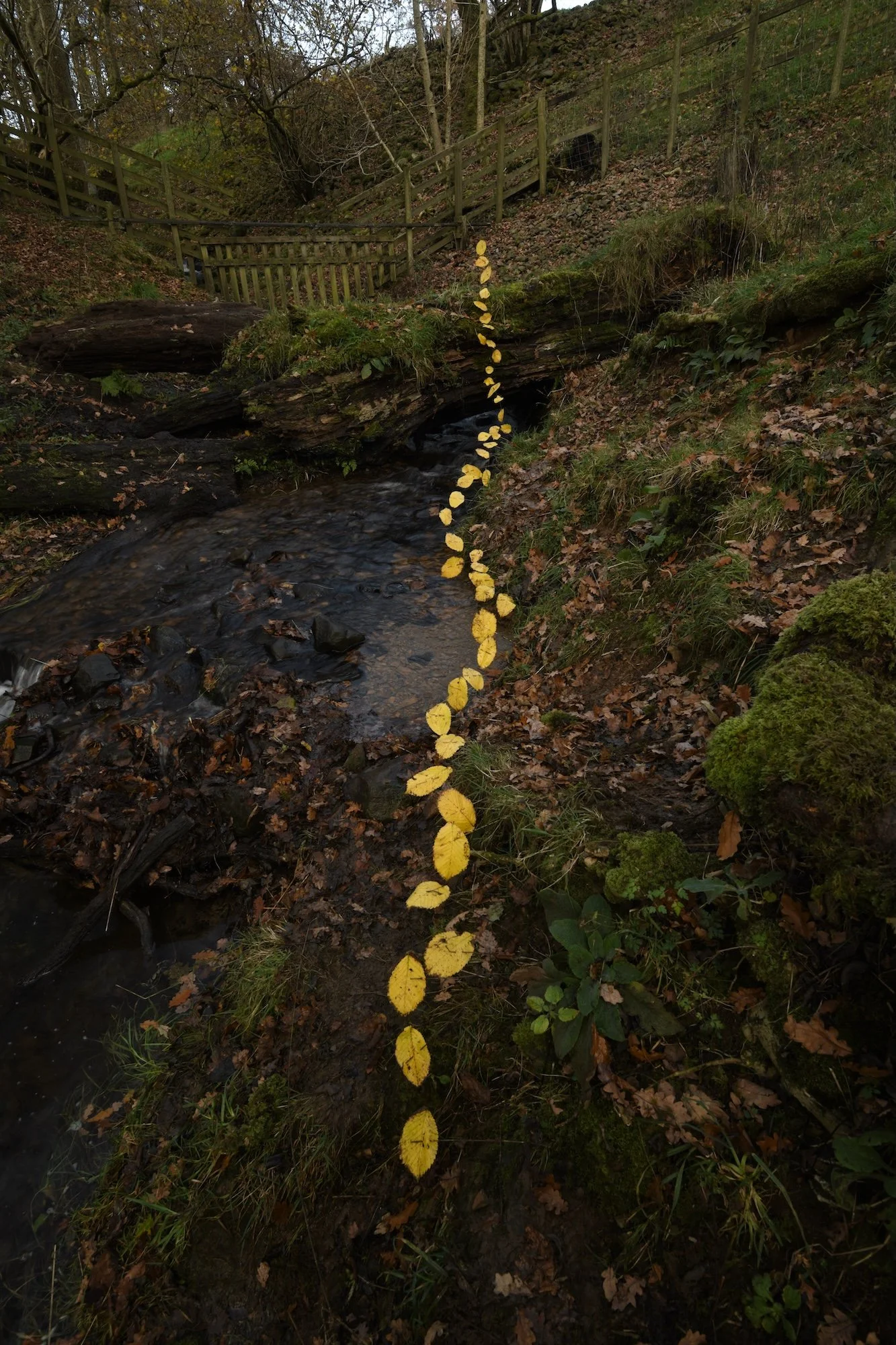
For Olle
Elm leaves, Grass stalks; Fallen elm Dumfriesshire, November 2025 by Andy Goldsworthy
The Return of Abstract Minimalism
The closure of another chaotic year, to say the least, hasn't calmed down–especially in the post-pandemic world. With time speeding up and the nostalgic flashbacks of the elder millennium childhood circulating on social media, the “longing for something tranquil” is badly desired. But when it comes to art, one thing that reminds me of tranquility would be abstract minimalism. This genre is making a hard comeback. The return to calm, meditative compositions and neutral tones is exactly what sums up this popular art style, and it’s making its way back into art fairs and exhibitions en masse.
Abstract minimalism has never been dormant. If you’ve ever browsed through Ikea or department stores, or flipped through an architectural/interior design magazine, you’ll spot an abstract minimalistic painting or creation of some sort. In fact, in the past five years, participating in galleries and attending art fairs, I see this genre coming back stronger than ever, but I couldn’t quite connect the dots as to why–until Pantone came out with their color of the year.
Leatrice Eiseman, the executive director of the Pantone Color Institute, explained that the reason behind the color of the year, ‘Cloud Dancer’, is to aim to be a calming influence in a frenetic society, rediscovering the value of measured consideration and quiet reflection. And as stated above, she is absolutely right. We are consistently surrounded by screens, information overload, and have become pessimistic about political issues globally and internationally. It’s no wonder that the social mood going into the new year, in the post-digital burnout, is a sense of calm and mindfulness.
If you’re an abstract minimal artist, then this is your year. We will only continue to see more of this minimalist art trend in 2026.
Bold Textures and Tactile Art
Whether 2D or 3D, art can evoke the senses. And connecting to art through the senses is something that attracts most of us. Textures like impasto style paintings, fiber art, clay sculptures, resin-based compositions (and more) are in demand now more than ever. We saw this firsthand during Art Basel Miami. Galleries like Casa Triangulo, (Richard) Gray, David Kordansky Gallery, and PPOW showcased some powerful and bold artwork, which proves that we’ll see more of the tactile art trend throughout the new year.
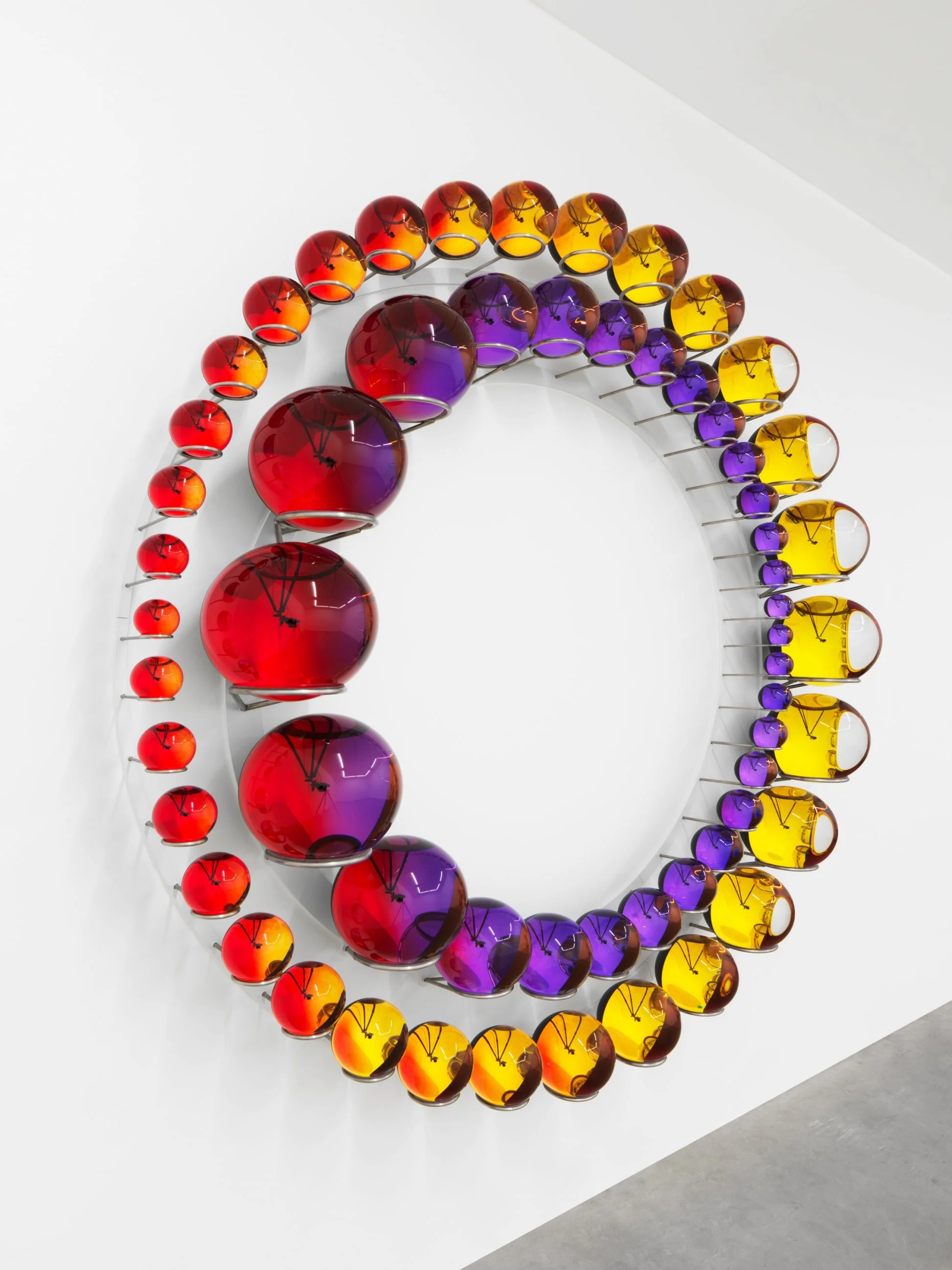
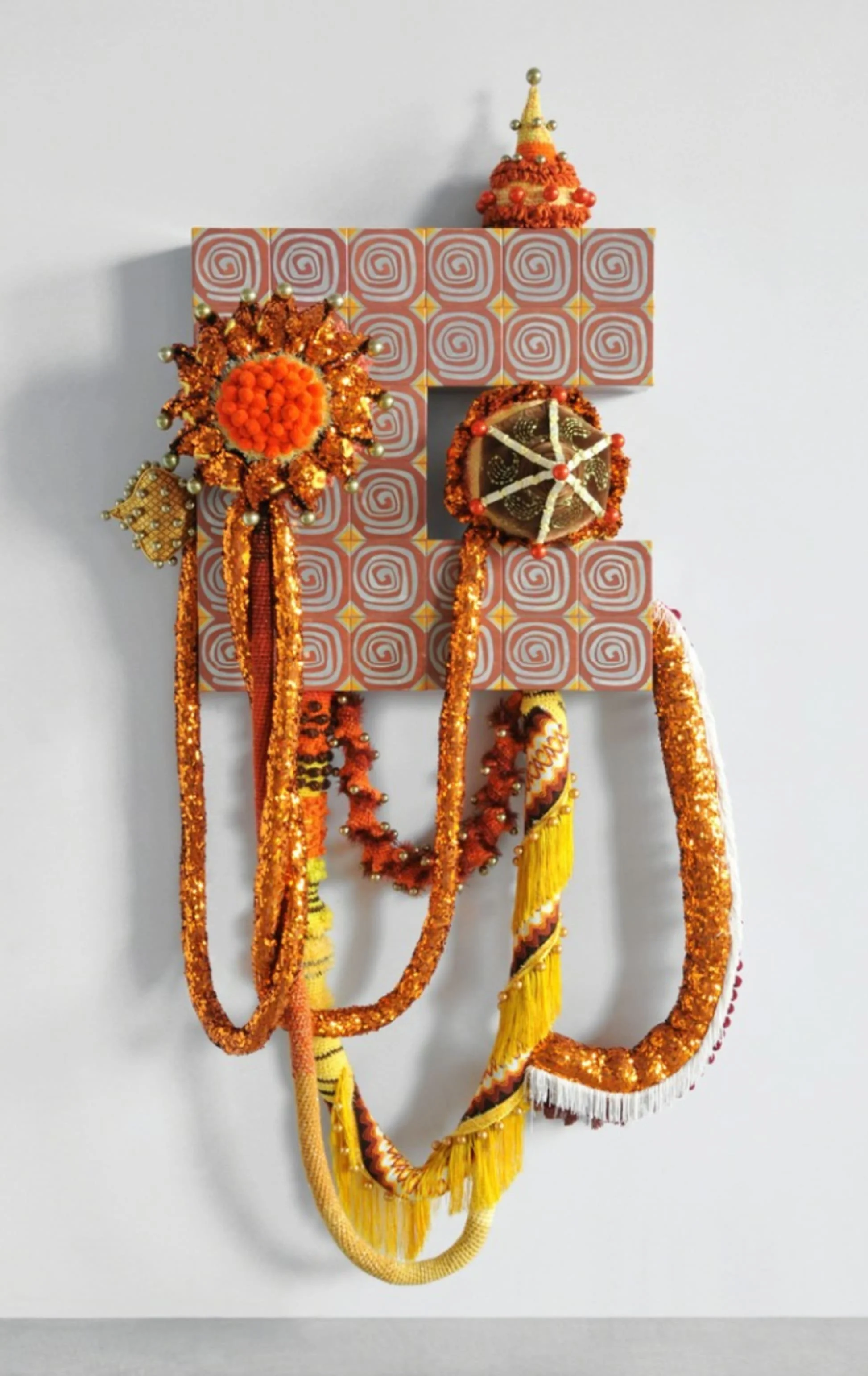
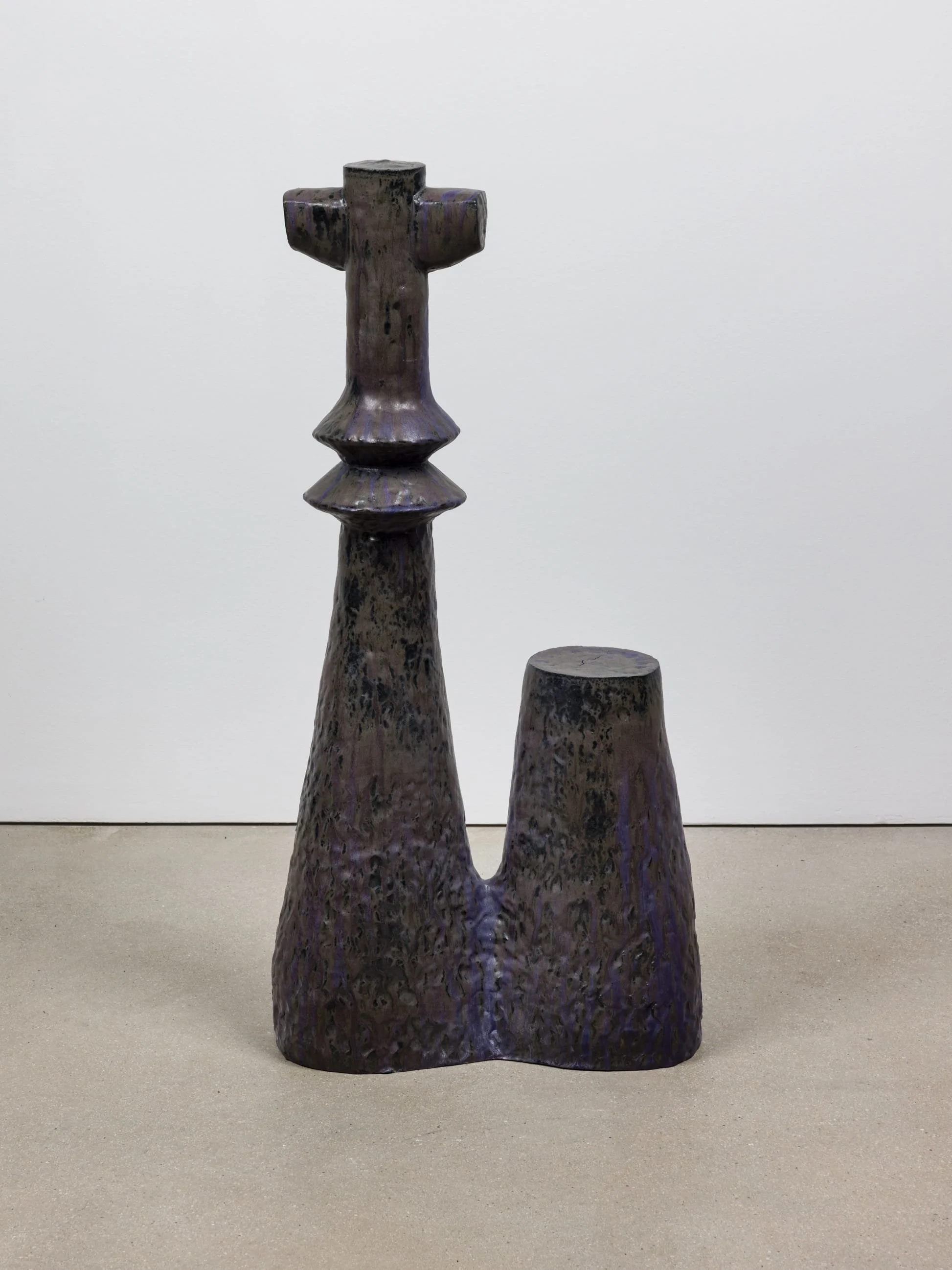
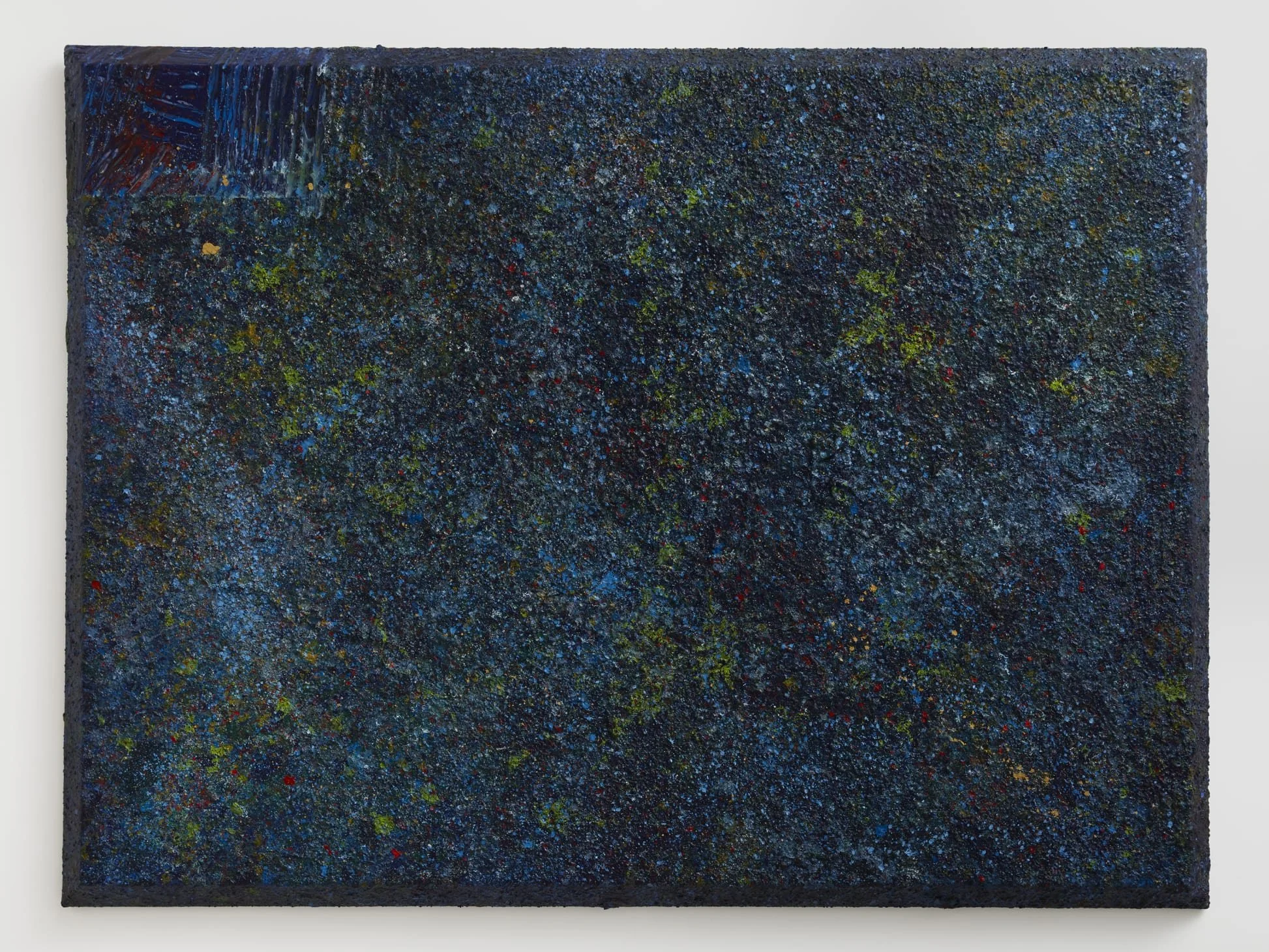
But exclusive palpable art isn’t what we will only see; interactive installations with this tactile art trend are also making headway. Gone are the days of not interacting with art anymore; certain concepts now encourage the viewer to engage with the art.
If you’re an avid Art Basel attendee, then you already know that the other satellite art events happen simultaneously. The Faena Hotel was no exception. This gem of a hotel not only participates but also has a program that supports artists. And this past December, Miami-based artist Pepe Mar was commissioned by the City of Miami Beach and the Miami Beach Convention to produce a site-specific installation at the Faena Hotel. ‘Tropical Stomping Grounds’ is a floor-to-ceiling immersive tableau that consists of printed textile imagery drawn from throughout Mar’s career. This tactile retrospective reflects his visual and emotional experience while also paying homage to Miami Beach, which is where Mar resides and has been practicing for two decades.
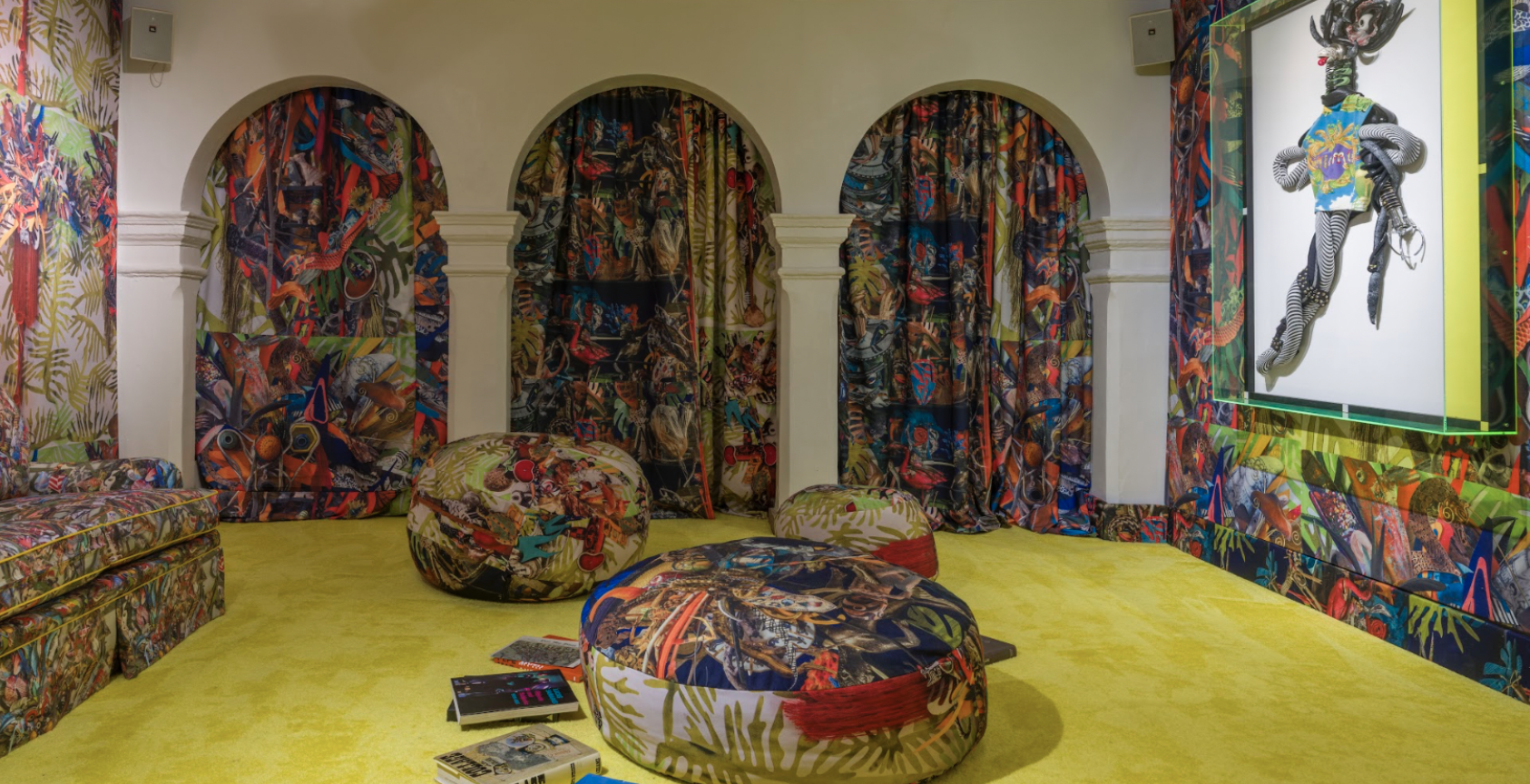
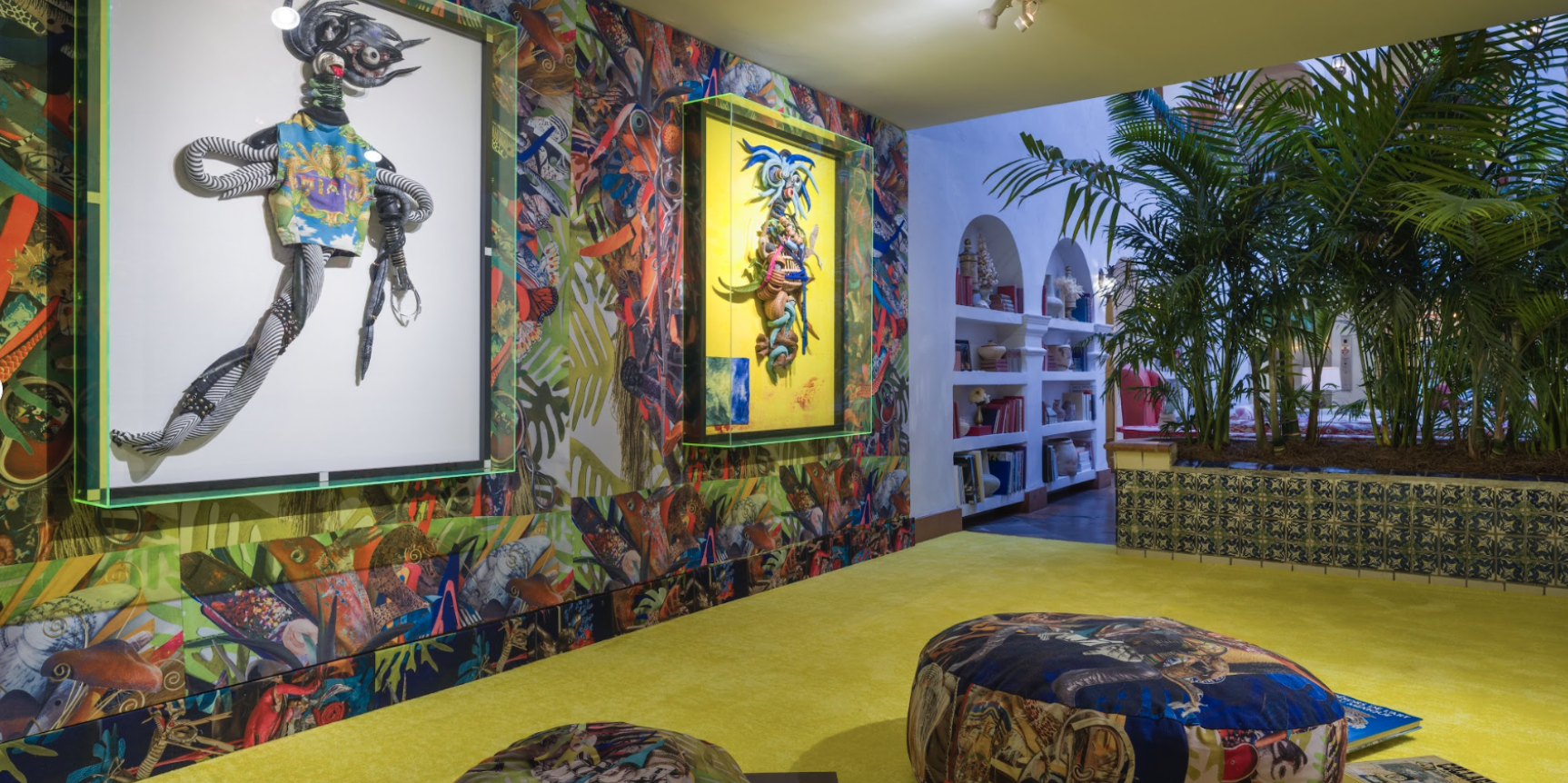
This goes to show how fiber, sculptures, and other mediums, combined and amplified by scale, elevate your experience in a different way from just a singular motif. Handmade, tangible art is what prompts onlookers to stop and marvel, making your experience more intimate. And these qualities are what collectors and galleries are looking for.
Cultural Fusion and Identity Art
Culture and art are deeply connected. The most powerful social movements are propped up by the arts, and what I’ve noticed happening over the past couple of decades is the rise of a cultural shift. Artists today have taken in what is currently happening to their environment or society, even their government, and are channeling it into their creative process–generating identity art. In many ways, this movement allows artists to explore and elevate sensitive dialogue, even connect on a macro level with the audience.
On a global scale, many countries are facing tough circumstances, such as war, pollution, social exploitation…the list goes on. But what appears to be sprouting growth in art is connection. Cross-cultural collaboration has brought some amazing artists together to express similarities. For example, Argentinian artist Claudia Del Río showcased her textile installation ‘Formas Respirantes’ during Art Miami Basel. By utilizing everyday materials from the Paraná River region, her installation highlights themes of protection and belonging. It pays tribute, not only to her heritage, but also reflects the commonality of shared experiences, place, and the essence of inhabiting.
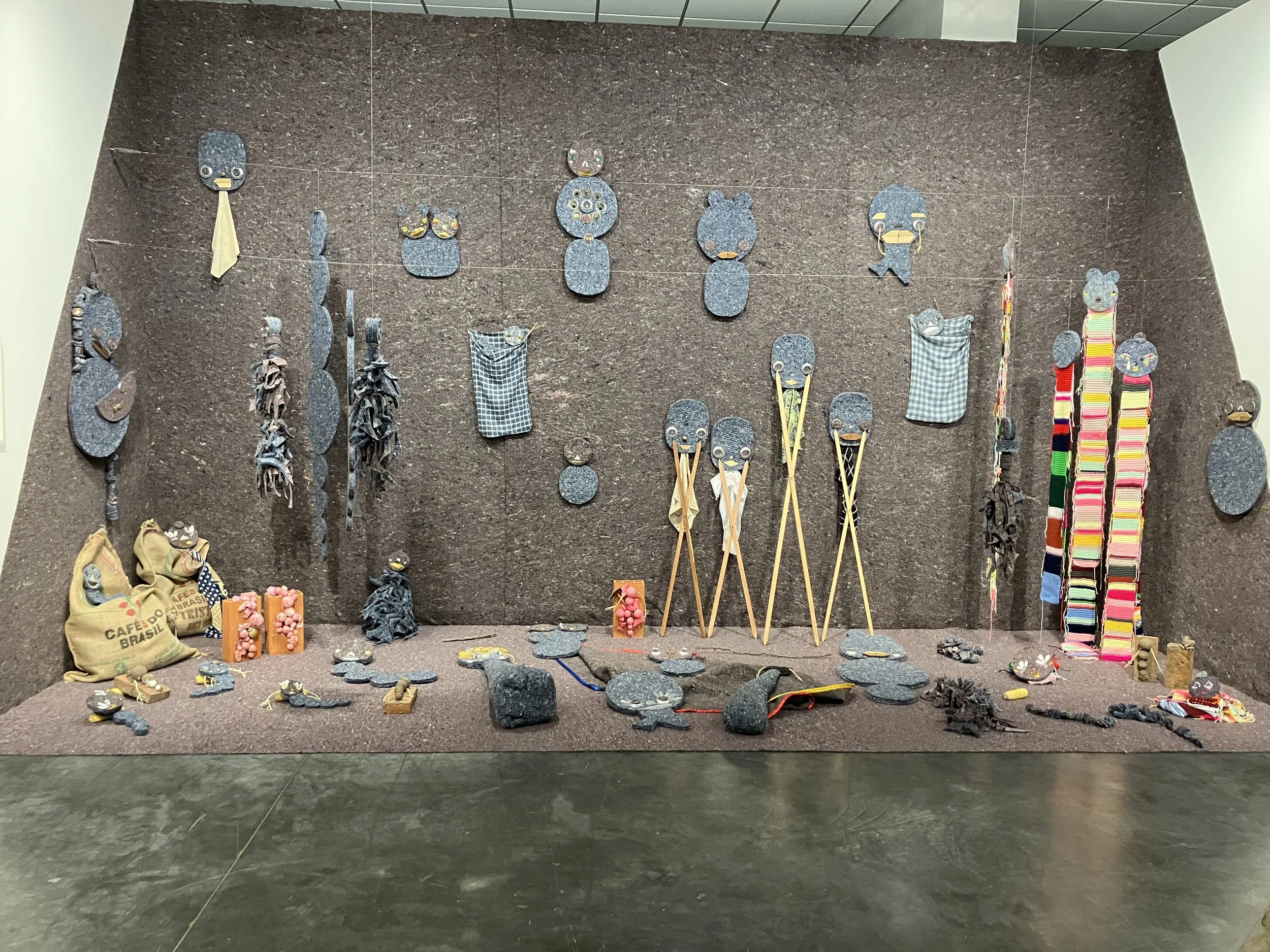
Even though cultural/identity art stands out in its own, there is definitely crossover into the digital art trend as well. Art Basel Miami’s Zero 10 initiative, where digital art meets human interaction, was one of the many sensory installations that were unveiled. Art veterans like James Turell infused his iconic light installations with dissolved objecthood digitally, connecting perceptual awareness to connect with his audience.
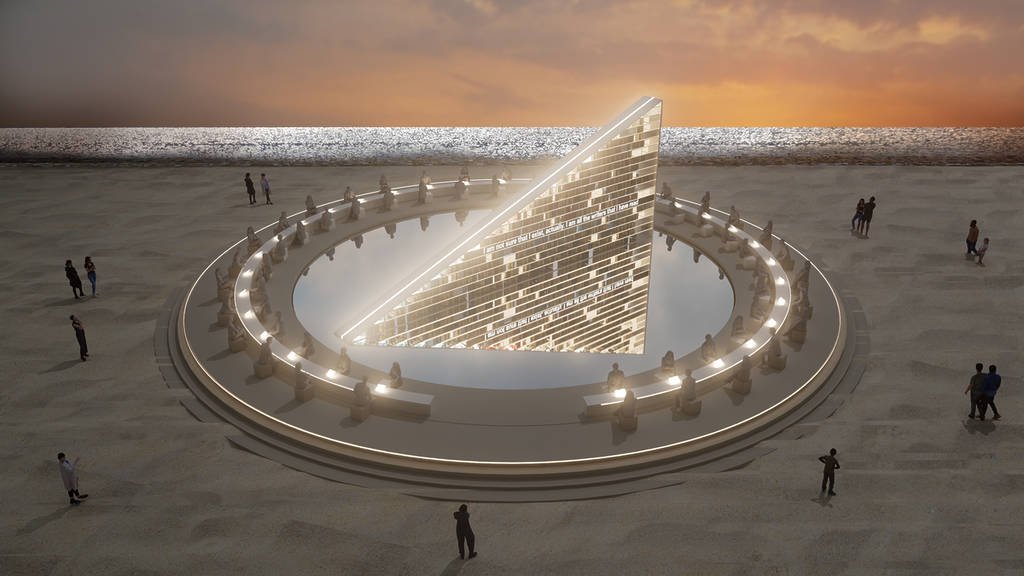
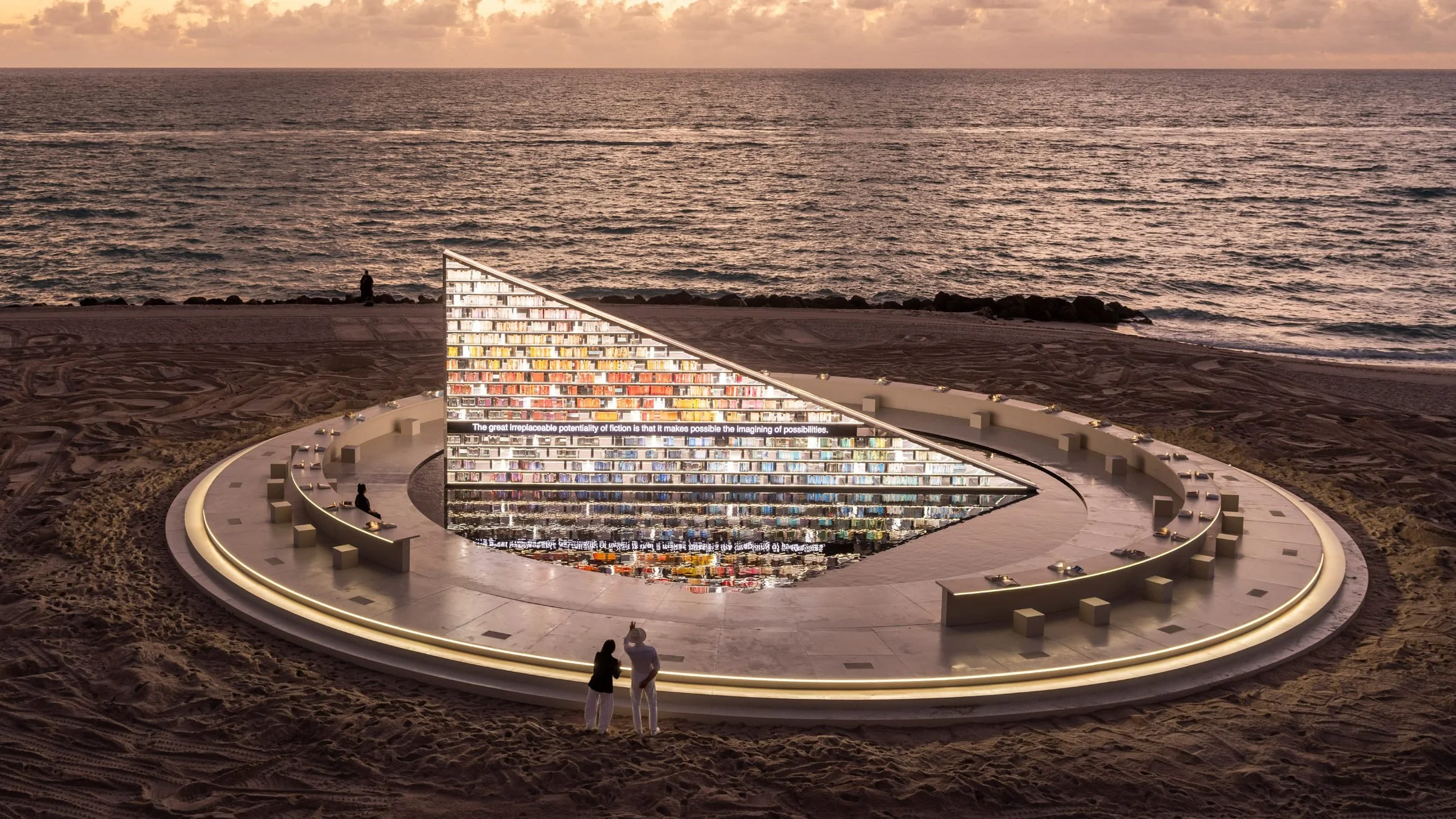
Storytelling is another way of connecting with people. We are constantly engulfed in our devices or lives, so that when we do look up from the phone, we might just connect with someone or something around us. British artist Es Devlin was commissioned to create a wonder at the Faena Hotel during Art Basel Miami, called the “Library of Us” which was a 50-foot revolving kinetic bookshelf. And yes…it moved! The bookshelf’s existence is to provide over 2500 books that were influential to the artist for the public to sit and participate in a shared experience through reading. This installation beats doom scrolling on our phones any day!
Hybrid Galleries and the Evolution of NFTs
Since the merging of technology, art has now shifted to make room for it. And as previously mentioned, during Art Basel in 2019, there was a dedicated section showcasing NFTs and digital art, which, in hindsight, was setting the stage for the future. Ever since, galleries have been trying to adapt to be more inclusive of the digital art movement. Fast forward six years later and you can now walk into any gallery that also has a digital gallery.
International art fairs, galleries, and museums are now becoming hybrid, sharing the art space with the digital realm. Even online platforms are riding the wave; you can even build and showcase your own digital exhibition on Metaverse. And as we see LLMs evolve, don’t be surprised to see more examples of the Botto Project, where these autonomous entities are creating a whole new category for digital art.
With all this in mind, one question remains: where does this leave NFTs? Will they still be relevant? The answer is yes, although not as trending as it was in 2019, they will still be in demand. However, these crypto-back digital tokens will only evolve, just as cryptocurrency has. Remember when cryptocurrency was a topic of conversation for everyone; some thought this was just a fad, while others actually invested in crypto, not really knowing where it would take them. Now you can actually purchase homes with it and trade. So if you’re a digital artist curious about jumping in, there’s really no harm in it. These digital art trends will only get better in the years to come.
Collectors’ Shift: Value in Emotion and Storytelling
The landscape of purchasing art has also shifted. Historically, acquiring any piece of artwork, regardless of what it was, was driven solely by superficial desire. Presently, collectors and the public want a bit more. Being moved by a piece of artwork or connecting to the story behind a series is what people are drawn to today. Art buyers are drawn to emotional narratives and authenticity, especially in an era where authenticity is in decline. For example, Patrizia Sandretto Re Rebaudengo has built her personal collection and foundation on works that resonate with society, culture, and the human condition, even commissioning new artworks from artists. She’s just one of the many collectors who shift their buying philosophy to be deeper, rather than just acquiring prestigious objects.
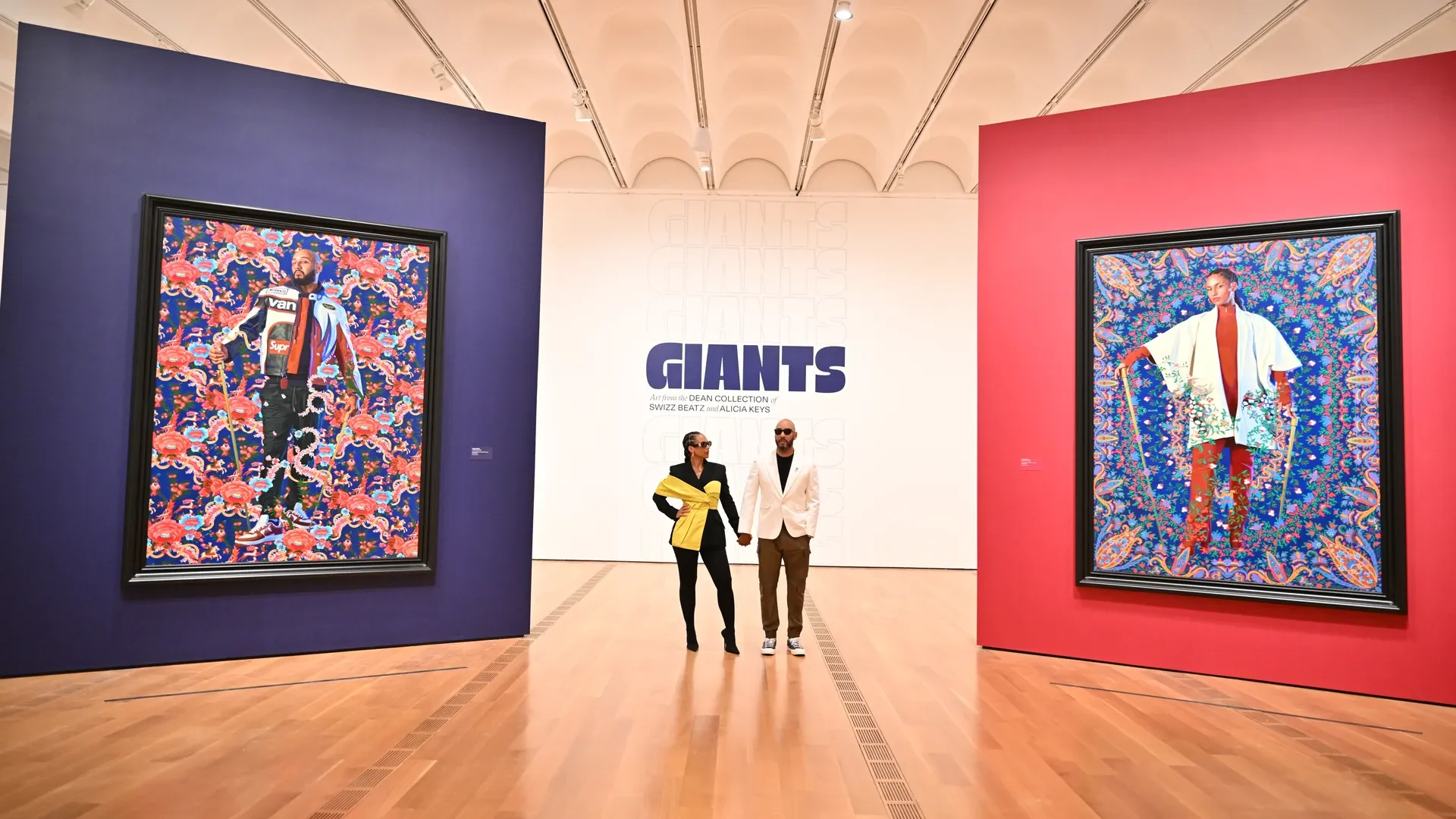
For those who do not know about Patrizia, you might know Alicia Keys and Swizz Beatz. These famous musicians are now passionate collectors who resonate with cultural and emotional artworks from Black artists. Some of the artists that you can find in their collection are works from Kehinde Wiley, Amy Sherald, Gordon Parks, among others.
But art collectors aren't just only ones shifting their purchasing motives. Buying small-scale works to reflect personal storytelling are selling points to collectors. Large-scale works are still in demand, but these are usually reserved for spaces that can appropriately house them. But smaller collections like drawings, intimate paintings, and stitched fiber art have become increasingly favorable because they make the buyer feel closer to the artist. It gives a sense of belonging in a previous space before entering a collection.
These art buying trends are especially important when the general public and collectors alike are craving authenticity in a time where our world has become a hybrid artificial version. Collecting is becoming more relational instead of transactional, and artists are valued for their perspective as much as skill.
Bottom Line
The future of art is bright! And for once, I am excited to see where these modern art trends take us. Now, more than ever, it is artists who will push the boundaries of innovation. But art, in itself, plays a crucial role in helping to accelerate important conversations today and perhaps preserve the environment along the way, even in small doses.
So if you’re an artist reading this, experiment with new mediums, explore a topic that strikes a core inside. Follow your own creative journey to see where it takes you. To quote the late author J.D. Salinger:
“An artist's only concern is to shoot for some kind of perfection, and on his own terms, not anyone else's.”
Visit our blog page for more creative reads!