

Art Vs Craft: Understanding One of the Oldest Art Debates
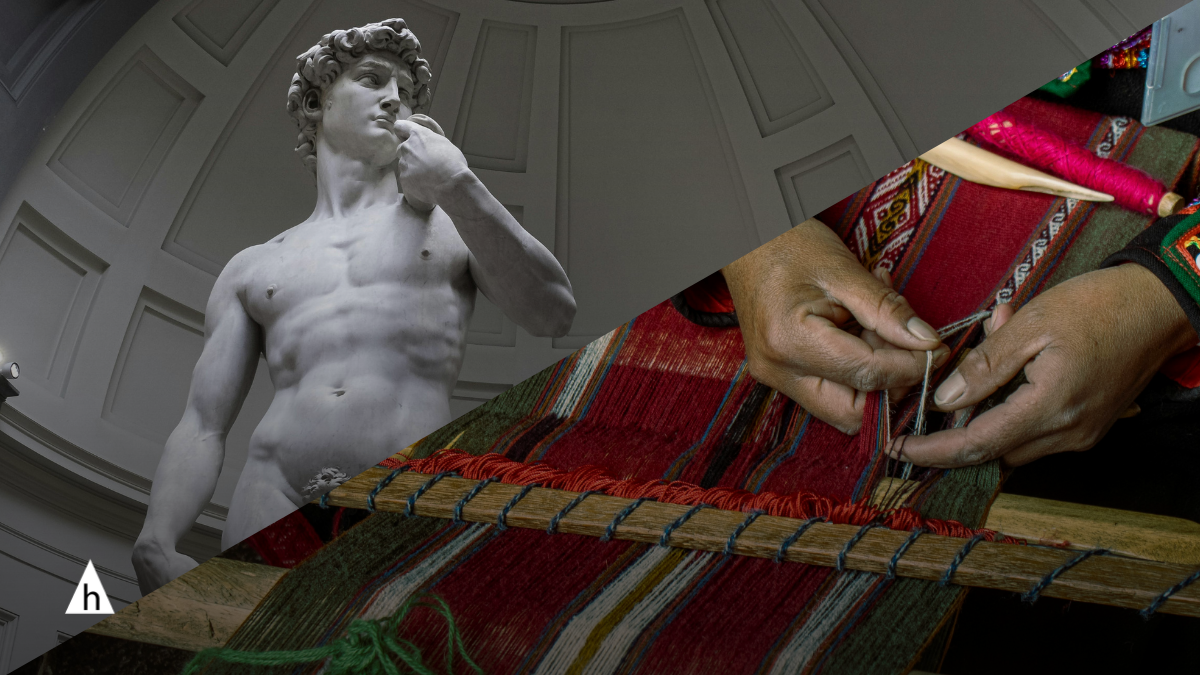
People tend to use the words art and craft interchangeably; they represent two distinct yet closely connected forms of creativity. But understanding the differences and where they overlap helps everyone appreciate both disciplines on a deeper level.
It is the age-old debate that I’ve found myself involved in or had to explain more times than I cared to. Museums, galleries, and major institutions often separate them, but there is no universally accepted definition, as the line is indeed blurry. But since this argument has come up recently and will continue to persist, I wanted to explore it in this article. Let’s dive in!
What Is Art?
Art is generally understood as the expression of ideas, emotions, experiences, or concepts through visual, auditory, literary, or performance-based mediums. It is the very essence of artistic expression––and a universal experience that everyone has been exposed to.
The Fundamentals of Art
There are four main principles of art:
Originality
Emotional communication
Conceptual thinking
Subjectivity
When combined, they effectively explain art. We can see these elements used in every subcategory of art: painting, sculpture, photography, installation art, performance art, digital art… the list goes on.
And for those who echo ”...but art is in the eye of the beholder,” this only sparks another long-standing debate of whether art is subjective or objective–a topic that deserves its own blog, but not now.
What Is Craft?
Craft emphasizes skilled workmanship, technique, and the creation of objects that are often functional, decorative, or both. It requires special manual skills and experience. This usually is either self-taught or passed down from generation to generation.
Fundamentals of Craft
Three core elements comprise craft:
Focus
Time and Practice
Mastery of Materials
By applying these elements, one can produce a well executed masterprice through this specific practice. Generally, beadwork (embroidery), tapestry, pottery, woodworking, glassblowing, leatherwork, textiles, and weaving all fall under craft–and have existed alongside art through the ages. People typically crafted not only for pleasure, but for utilitarian purposes.
For example, if we go back in time to ancient Pompeii, pottery was uncovered during the excavation. It provided evidence of how the Italians used it. Pottery was a necessity for everyday life, containing food, oil lamps for light, and other uses. But these objects weren’t plain by no means; they were highly adorned with intricate designs and shapes. And because there were specific artisans who mastered the craftsmanship of pottery, these well-made objects stood the test of time 2,000 years later!
Art vs. Craft: The Key Differences
While art and craft share creativity and technical skill, they often differ in purpose, intention, and how society values them. Let’s break this down in the table below:
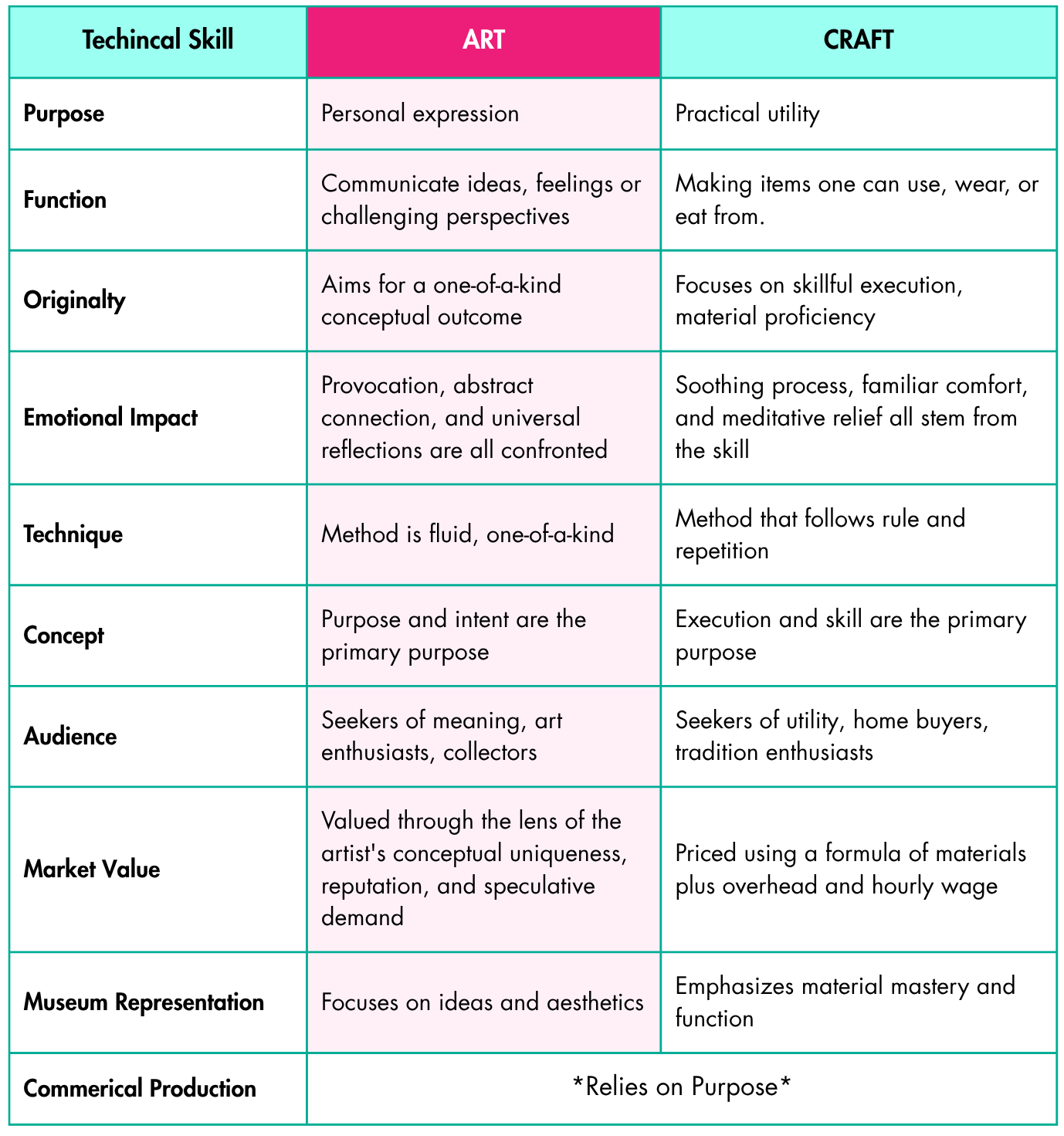
Although we can now define each clearly, there has always been historical separation. During the Renaissance period (around the 14th century), Florentine society drove a wedge between the two concepts, valuing the intellectual over manual workshop production. To say the least, this is where the snobbery origins took place. The debate over fine art and craft emerged as a pursuit of the mind, while craft was closely tied to physical labor, which added another complicated layer: the battle between gender and class.
Fine art was viewed as a masculine form of public intellectualism. Whereas crafts—like weaving and embroidery—were marginalized as feminine. And during this time, when women were not viewed as equal, this particular mindset set it in stone. But in the 19th century, we see artists begin to challenge this narrative, and by the 20th century, with the Bauhaus movement, artists ultimately destroyed the barriers with their ideal of architecture, weaving, and metalwork as parts of a shared creative process.
Presently, this debate has had scholars and historians dissect these two disciplines with a finetooth comb. If you look at their historical context (where I dive in more closely later) it is easy to understand where the separation began, but in the ‘Conceptual’ art world we live in today, has us compelled to reconsider both once more.
Where Art and Craft Overlap
Modern creative practice increasingly blurs the line between art and craft, making rigid definitions more difficult than ever. Today, the gender mindset of craft and art no longer matter. Rather than this antiquated labeling, artists are categorized into subcategories based on the craft or skill set. For instance, people who specialize in pottery are now known as ceramic artists; textile masters are fiber artists, glass blowers are considered glass artists, and so on. And each categorical artist typically goes beyond their skill set, either to enhance the industry or to challenge it.
But in recent years, fine art has adopted these so-called ‘blurred lines’ and values art based on the overlap. Collectors and museums view craftsmanship to gauge the artists’ dedication and knowledge of their work. It also acts as a benchmark of durability––whether the piece of artwork will last over time. This extends into conceptual work. Since conceptual art is the main focus presently among collectors, conceptual craft merges traditional skills while prioritizing the underlying idea of decoration as part of storytelling. In other words, the chosen material is a conscious one.
This brings us to collectable craft within fine art. Handcrafted, functional, sculpted objects from glass, clay, or other materials are valued for their artistic modernization and unique vision. For example, artists like Grayson Perry create ceramic works, vibrant in color and adorned with social commentary that challenges British prejudices. However, these artworks aren’t particularly functional, they do lead us to the next ambiguous category: functional sculpture.
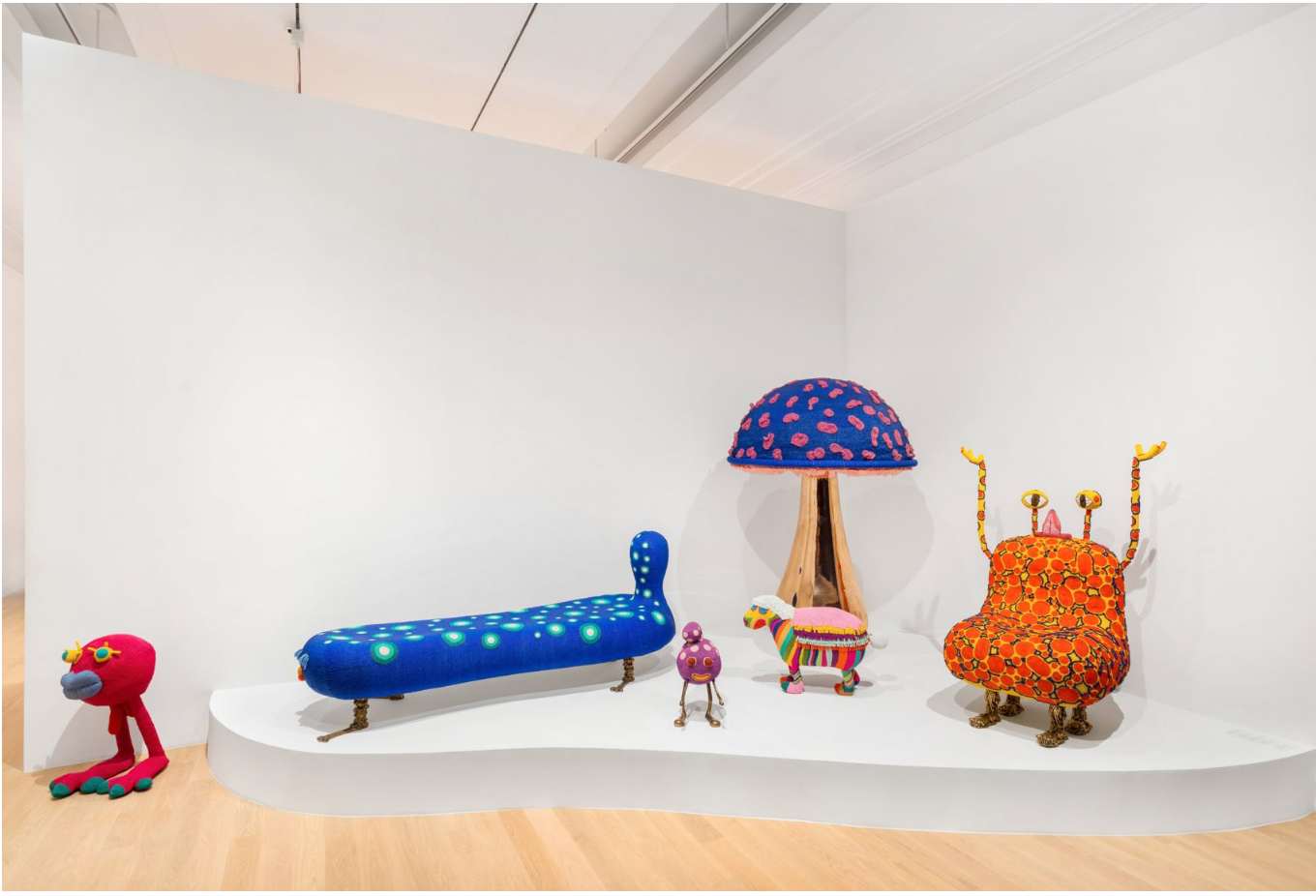
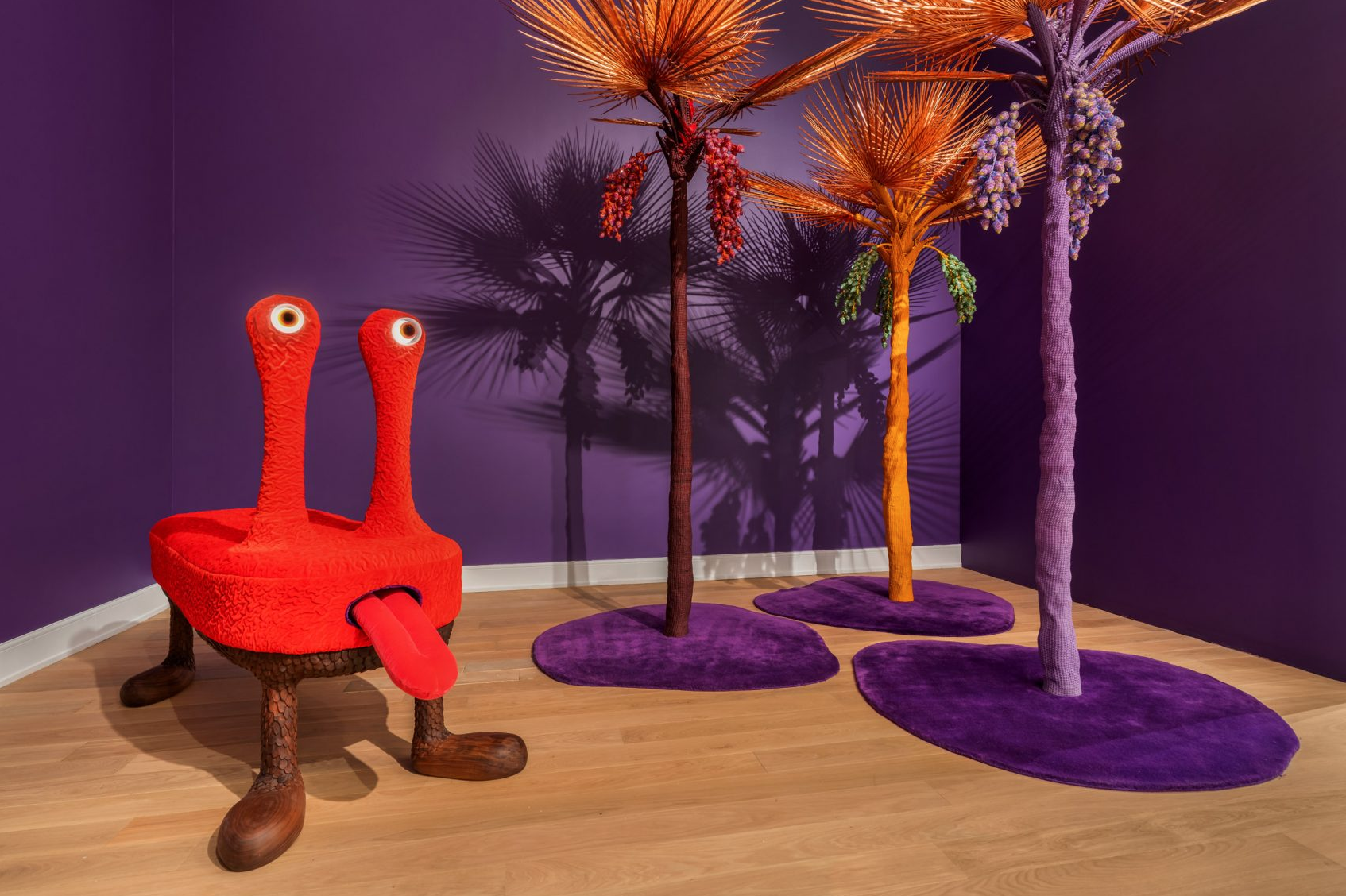
Functional sculpture blends fine art with everyday utility. Furniture design is a great example––it takes everyday items and elevates their status. Wendall Castel, Franz West, and Rick Owens are among the artists who take this disciplinary head-on with their individualistic uniqueness. But the best example, in my opinion, is the Haas Brothers.
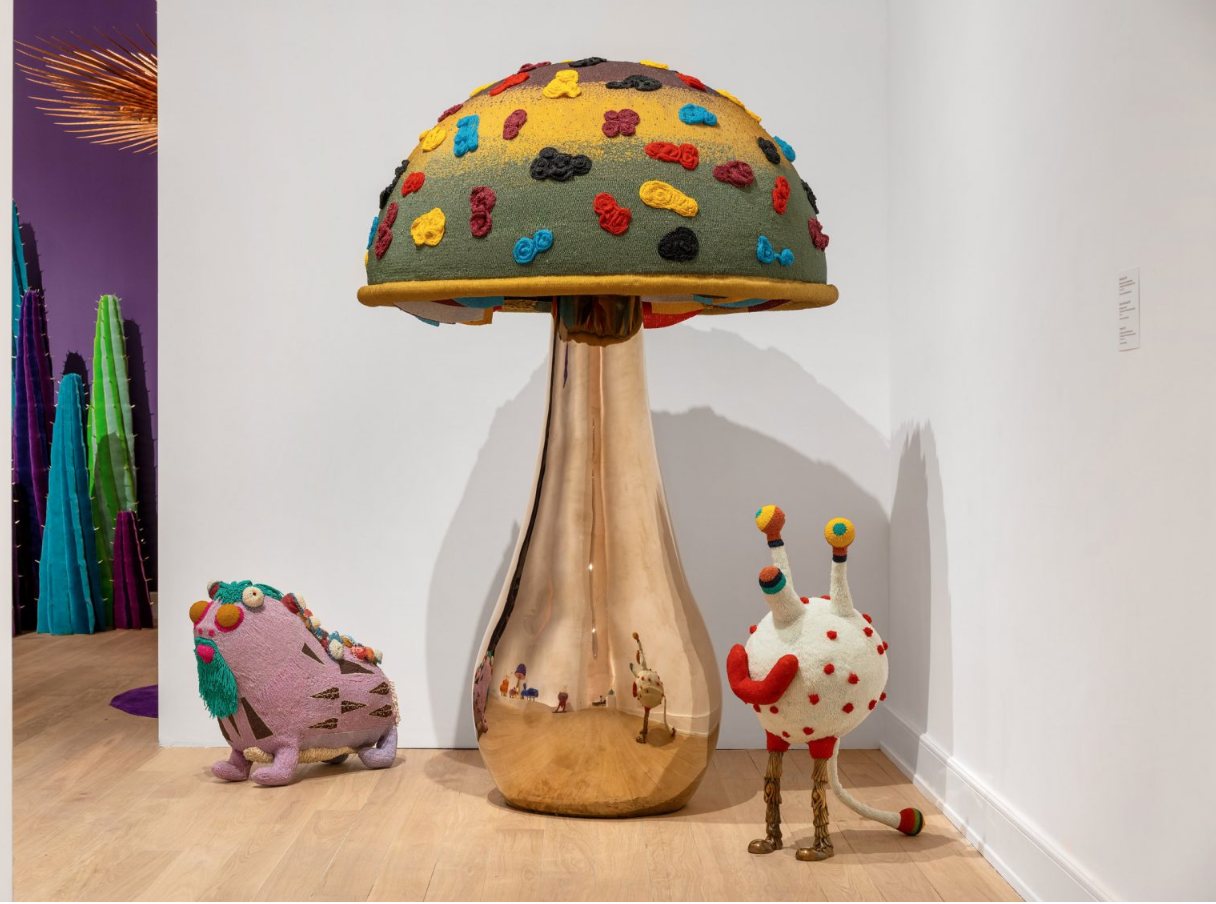
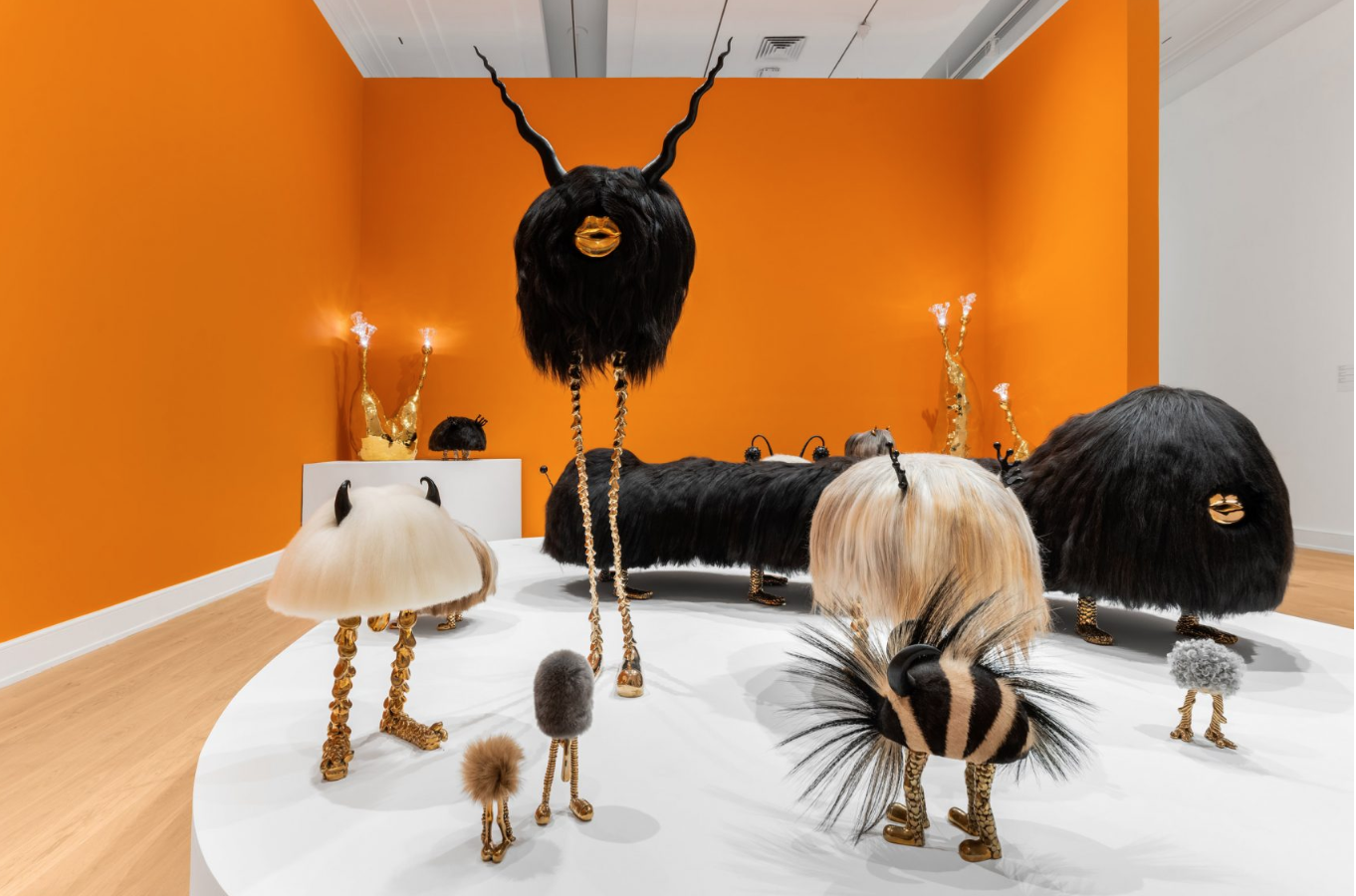
Twins Nikolai and Simon Haas are highly celebrated for pushing this boundary to a new level. Their works embrace both art and craft through highly adorned functional fine art, collectible design, and contemporary sculpture. In 2018/19, the brothers’ first solo exhibition at the Bass Museum in Miami, Florida, Ferngully, was a vibrant display of highly executed beadwork, a collaboration with South African women to create a range of fauna and flora, alongside quirky characters in the form of functional furniture. And yes, you guessed it correctly, that their exhibition was inspired by the 1992 film FernGully: The Last Rainforest, which definitely took me back to my childhood.


The History of the Art vs. Craft Debate
The distinction between art and craft has evolved over thousands of years, and reflects changing cultural values rather than fixed rules. Starting with the ancient period, both art and craft were driven by the rise of cities, their governments, and the establishment of writing systems; then further evolves.
Ancient civilizations
Ancient artifacts from Egypt and Greece reveal how art and craft were influenced by religion, technologies, and social hierarchies. Art wasn’t a primary focus during this time, but was interwoven with craft. Monuments and various statues were created to reinforce divine rule, linking rulers to deities which require artisans to construct. Craft came in the form of highly decorative objects and hieroglyphics that were made and placed inside tombs to support the deceased's journey. It was common to see this discpinlary closely associated with death as ancient civilization focused on the afterlife. But craft required specific materials to make, which led to advancements in technologies like iron and bronze work, ceramics, and hieroglyphics. To produce such items, establishing trade routes was crucial for sourcing the materials, and this is where we see craft play into the economic role.
Middle Ages
During the Middle Ages, art and craft were deeply tied to religious devotion, political power, serfdom, as well as trade guilds. The role of religion was at its highest during this period, and the Catholic Church was the driving force behind it. Visual art shifted away from naturalism and more towards religious symbolism. And since the Catholic Church was viewed as the most powerful and closest to divinity, they were the main procurer of art––often funding massive projects. It is the very reason why almost every European church has large quantities of medieval art.
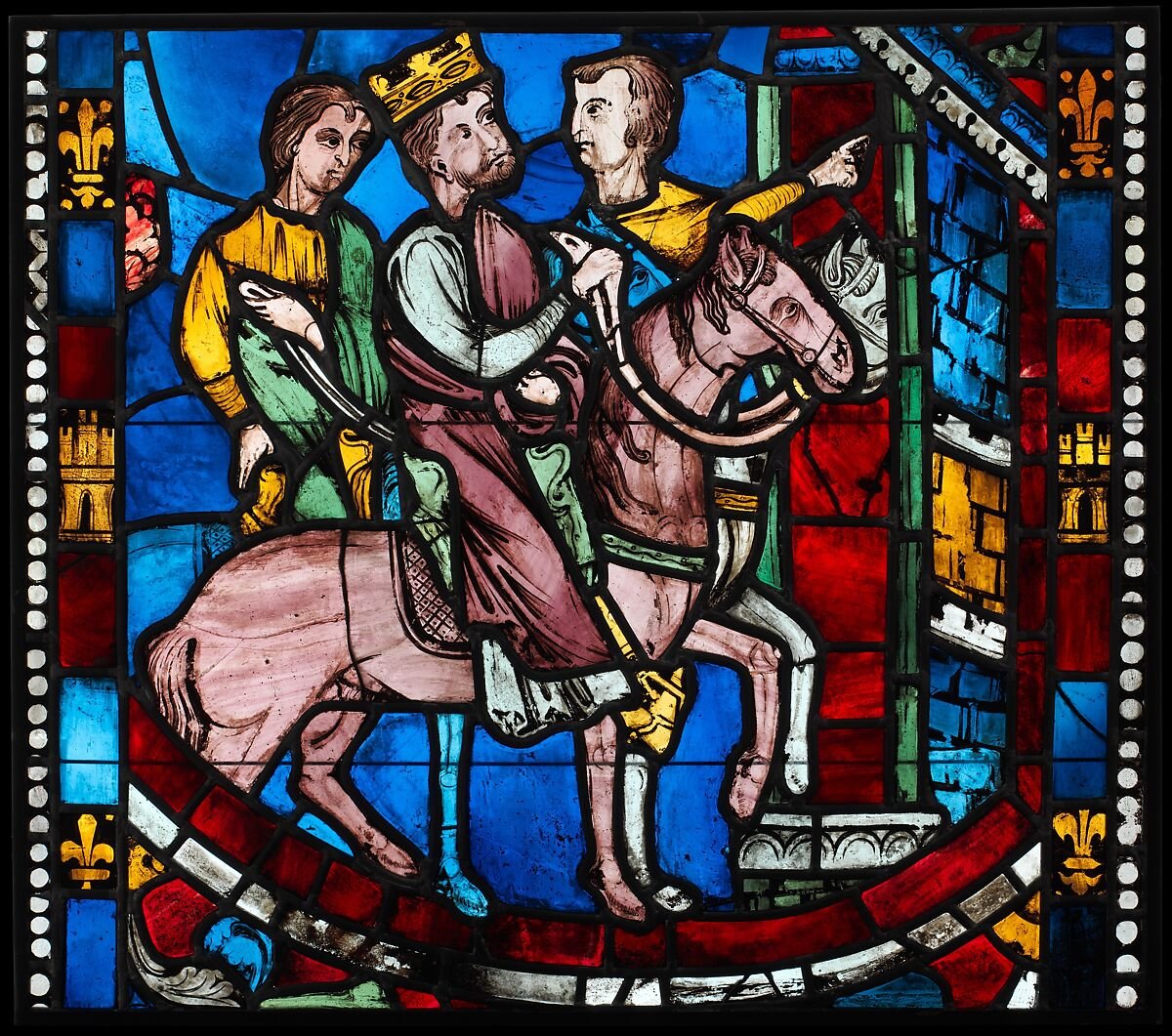
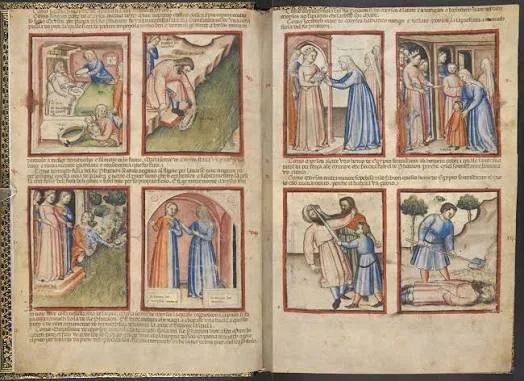
Medieval society was extremely illiterate, and a way to control people was through religion. This meant the bible had to become visual; stained glass, illustrations, and carvings were created for the public. And while artists kept their work anonymous to honor god and not themsleves; Monasteries became the centre of craft. Monks produced exquisite illustrated manuscripts, and Gothic churches displayed beautiful stained glass.
But there was a business side to craft. The Guild system was established by artisans to control training, quality, and value. It was also a way to prove their skills in order to gain access to the guild or even become an official artisan.
Renaissance
In a time when art was being elevated and the concept of the "artist" began to take shape, the Renaissance era is where we begin to see art and craft officially separate. Craft was seen as skilled manual labor for decorative items, while art shifted from technical labor to an intellectual and creative pursuit. This was where we see science and art fused together. Artists were considered scientists as they studied anatomy, geometry, and optics; a perfect example of this is Leonardo da Vinci.
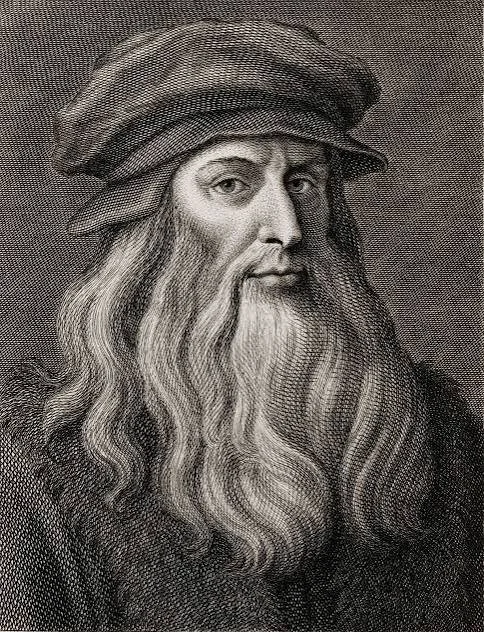
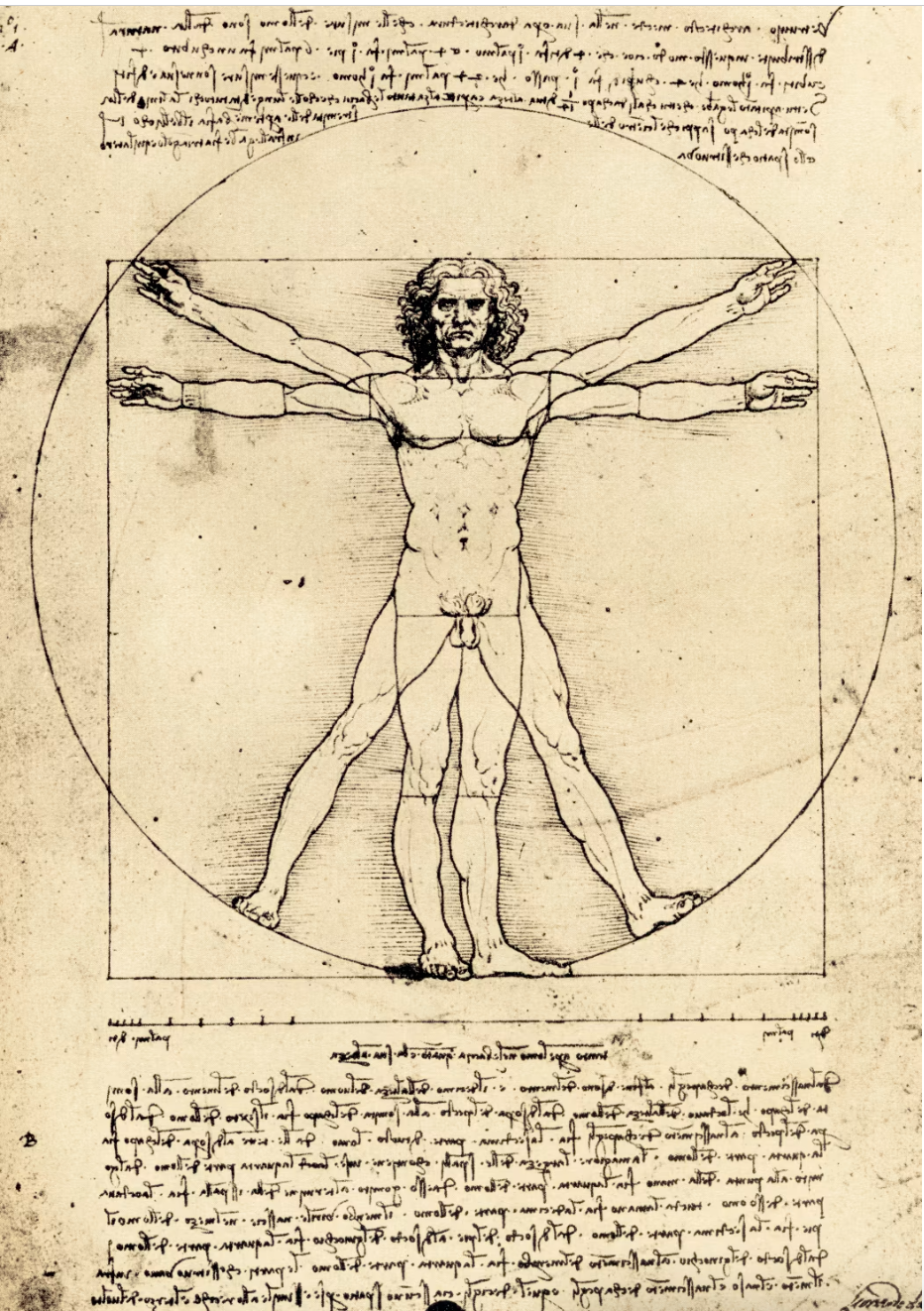
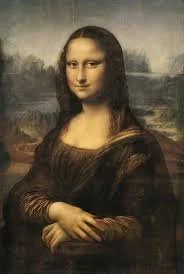
Famous for his Mona Lisa, the Vitruvian Man, amongst many more masterful works, he was a genius of his time with illustrations of flying objects, anatomy, and engineering. Figures like Filippo Brunelleschi, who invented linear perspective and was the engineer behind the Florence Cathedral dome, and Leon Battista Alberti, who wrote influential treatises, were pivotal in this transformative period, heralding the individual genius.
While art had taken off into its own path, craft continued within the guild system. It shifted from being composed of manual laborers to younger apprentices who didn’t yet have the experience to produce masterpieces. And because craft’s fundamentals were the focus of repetition and physical skill, this was the ideal environment for younger, eager artists to become more refined. Artists like Sandro Botticelli trained as a goldsmith, Raphael (Raffaello Sanzio) trained in workshops, and even Filippo Brunelleschi and Leonardo da Vinci were also trained under the guild systems before they broke out as masters.
Industrial Revolution
As modernization was looming on the horizon, major inventions shifted society away from farming and hand tools to large-scale factories during the mid-18th to 19th centuries, beginning in Great Britain. This meant people worked in factories to make a living wage. With these large-scale inventions, companies could manufacture large quantities of products at a low cost, often lacking in personal touch and creating an item that was basically ‘soulless’.
The Industrial Revolution tilted art and craft into more of a philosophical position. Art critics like John Ruskin defined art and craft as hand-made objects that gave pure joy to the artist creating them. Because many laborers spent their days in factories performing the same grueling tasks, expressing creativity through art and craft became a way to break free from mass-produced goods. A direct rejection of factory-made items.
Arts and Crafts Movement
At the same time as the Industrial Revolution, art and craft began to reform. For instance, imagine witnessing a time where you come from highly decorated items to mundane mass-produced items, that you longed for beauty. This scenario is exactly what happened. Artists began to reject industrialization. English textile designer and artist William Morris believed machines made people extremely unhappy and produced hideous and dishonest goods.
The Arts and Crafts Movement gave value back to the maker. Making things by hand gave dignity and joy to the common laborer––items like furniture, textiles, and pottery were just as important as fine artwork. This period also marked the return of natural materials like wood, stained glass, wrought iron, and hand-painted fabrics. Artists drew inspiration from nature, incorporating elements like leaves, vines, and flowers within their designs. It was the very foundation that made way for Art Nouveau.
Modern and contemporary art
The concept behind both has been an age-long separatist view, but as we enter into the modern and contemporary world, we see the two disciplines blend. Art is increasingly being redefined as conceptual, often challenging societal norms through a range of mediums––this could be from materials, performance, or video. But it is where craft becomes a subsection of art. Today we still view craft as a skill-first mindset, but it also embodies beauty and functionality. Both have strong concepts behind them, which dismantles the age-long-standing divide. As mentioned above chart, when we analyze these two ideas, you can clearly see they overlap one another, which is why we see museums and collectors have adapted to both. The new understanding is that both art and craft deserve the same respect, as the art world values the maker.
Can Craft Be Considered Art?
In my opinion, yes! Craft can be art without a doubt. As we’ve witnessed history separate the two, both embody an incredible skill set that overlap one another. Ceramics, textiles, installation work, glass making that were once coined as craft, are now considered fine art, each pushing the boundaries of traditional shapes, design, and experiences.
Major institutions have all shifted their views as well. They have collectively moved away from the old barriers to focus on the materials, cultural narratives, and the creative skill set behind each artwork––it is why we see many contemporary artists intentionally merge both disciplines.
Famous Artists Who Blur the Line
Some of today's most respected creators challenge traditional definitions by combining conceptual thinking with extraordinary craftsmanship. Artists like Ai Weiwei, Magdalene Odundo, Dale Chihuly, El Anatsui, Sheila Hicks (and many more) all intentionally blur the line between art and craft with their immense bodies of work.
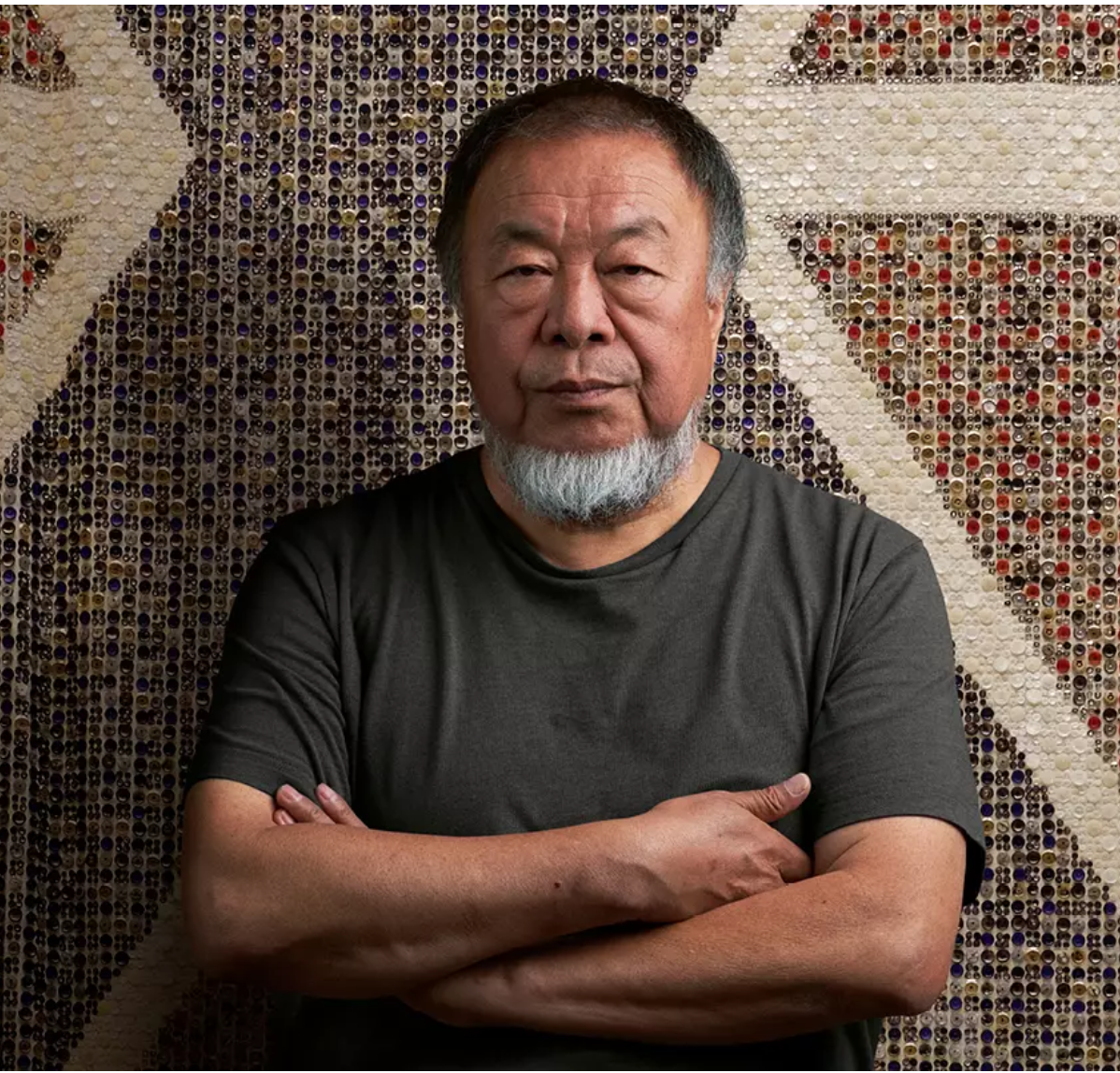
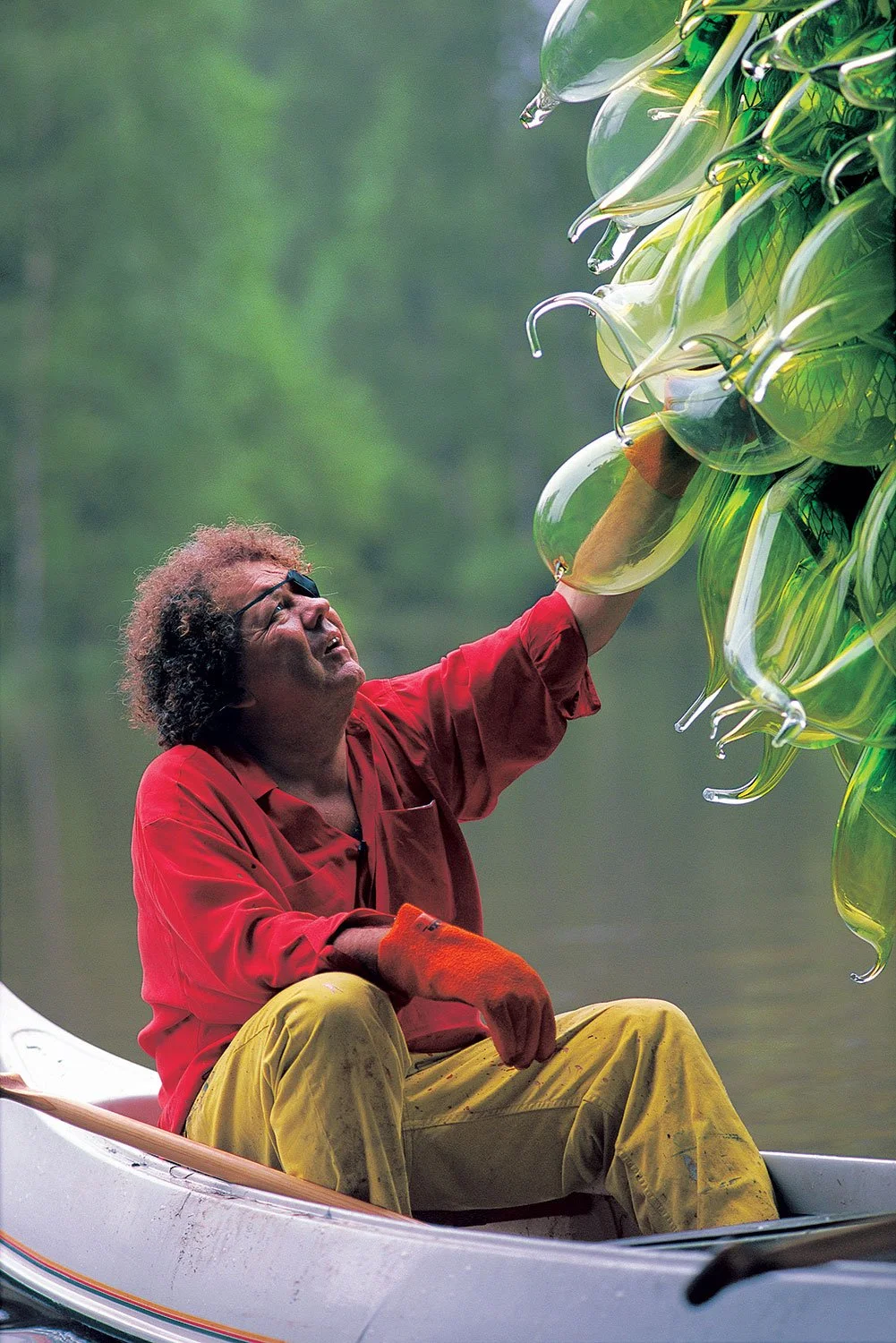
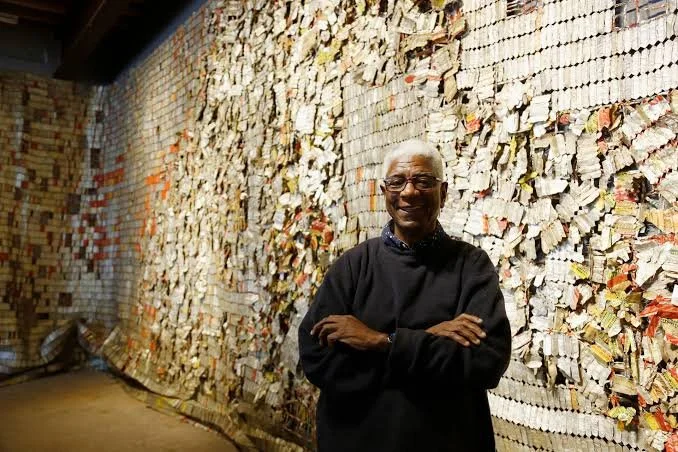
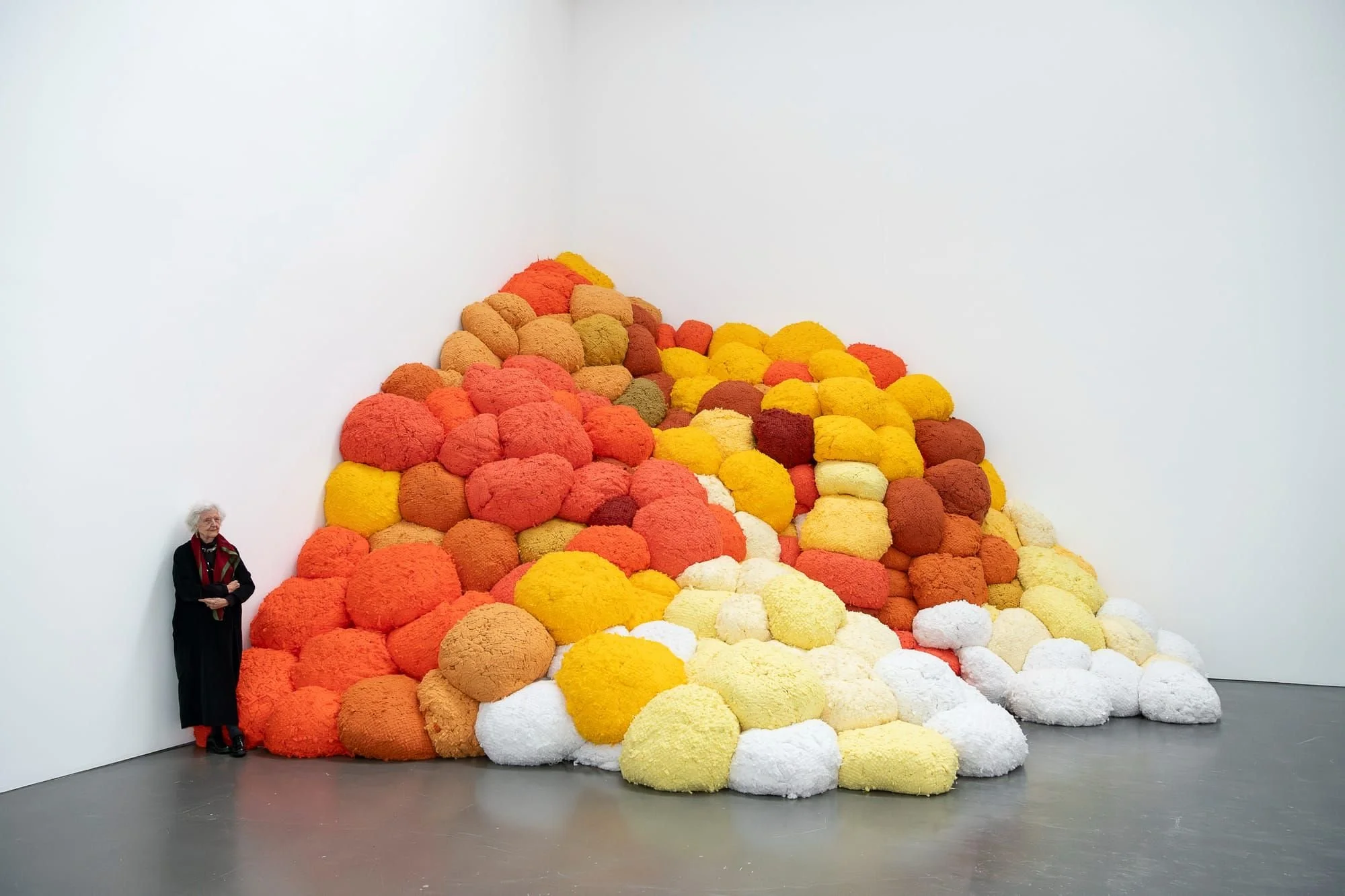
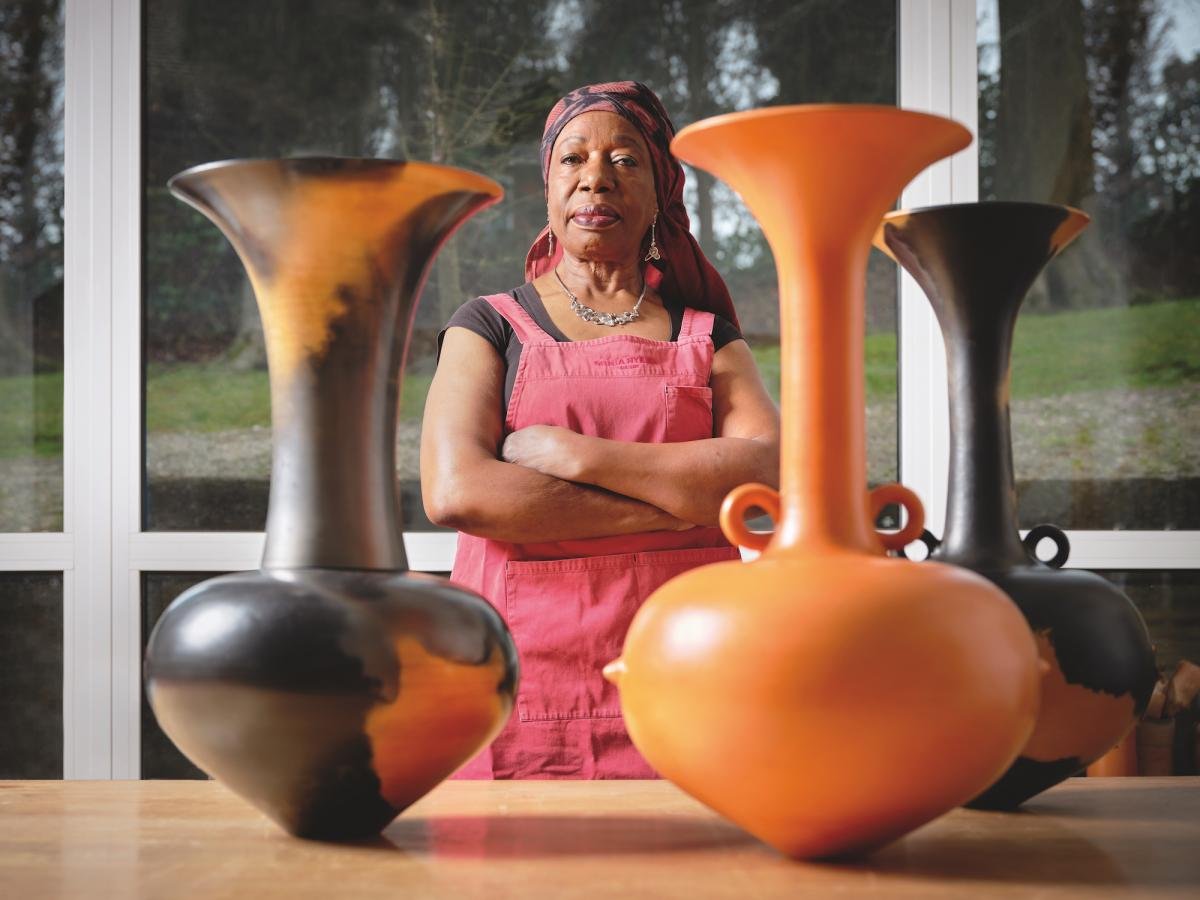
Their choice of materials falls within their respective conceptual aesthetics. Let’s take Ai Weiwei’s Sunflower Seeds. This body of work consisted of millions of tiny ceramic seeds that were individually molded, fired, and hand-painted by over 1,600 local craftspeople, turning collective artisan labor into a vast conceptual statement––a double-edged conceptual sword in this case.
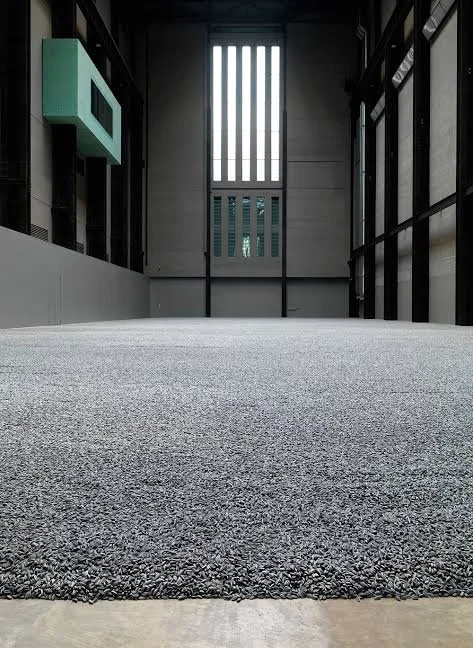
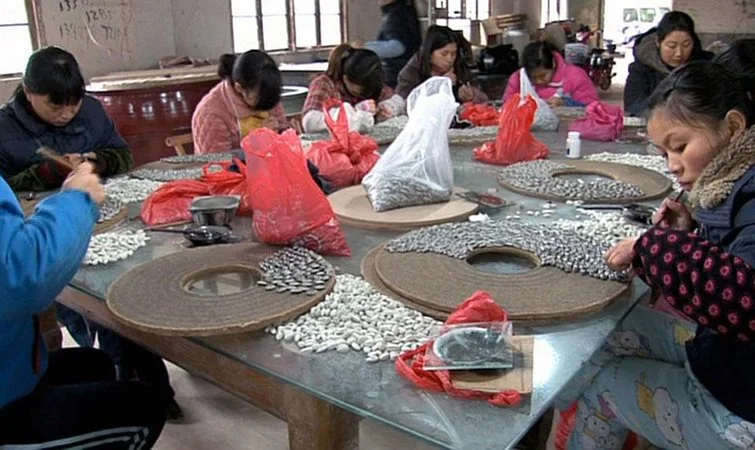
Ai Weiwei uses porcelain to reflect China's rich history while challenging the negative connotation of “Made in China”. Porcelain was not only labor-intensive but also a symbol of imperial culture, with a long history dating back to the Han dynasty (in about 200 B.C.E.), and was a highly desired commodity for export via the Silk Road––directly linking the idea of China in the West. By employing skilled artisans from Jingdezhen to create unique seeds, he references traditional craftsmanship, challenging the uniformity norm widely practiced in China.
How we experience artwork differs, but it simultaneously makes a profound impact. Ai Weiwei’s Sunflower Seeds was an interactive installation, which is the type of installation that encourages participation. In this case you could touch, roll around, lie, or walk across over the 100 million crafted seeds––which required a special place to house. By choosing the sunflower seed, Ai Weiwei’s installation confronts the viewer to reflect on their own consumerism of everyday objects and how they affect the lives of people across the globe. And what better place to experience this than the Tate Modern in London, UK, where the sheer size of this place will have you feeling like that very seed.
Museums now recognize both art and craft by evaluating historical context, cultural purpose, and technical mastery, which Ai Weiwei’s Sunflower Seeds fit the bill. Even curators design exhibitions specifically to explore the blurred traditional boundaries between fine art and hand-crafted objects. There isn’t an art fair or gallery that doesn’t have at least one or several artists in its roster who embody both.
Why the Debate Still Matters
Understanding the distinction between art and craft and how it influences creative work gives you a foundation for the debate. But how it’s taught, collected, exhibited, and valued around the world adds the angle for the debater. However you view it, the historical context is where most people get caught up, which scholars and art historians thrive on. But this very debate has an impact.
In art education, these two concepts are still divided into separate departments, as these curricula have very different approaches in development. Fine art teaches critical thinking and concepts, while craft classes (i.e., ceramics, jewelry making, fashion, etc) teach the mastery of the material and techniques; noticing the pattern from Renaissance. However, some educational institutions have begun to incorporate both as mixed-media and interdisciplinary studios into their newer cirricula––often blending students’ perspectives on the matter.
Galleries are still categorized by these disciplinaries, often being defined by who and what they display, into either fine art galleries or craft galleries. But there are rare instances where you’ll see a high-end contemporary gallery display traditional craft unless the concept behind it is powerful. This is also true with museums. Museums tend to follow suit, but with spatial hierarchy, giving fine art a more prominent spotlight within the said building, while crafts or ‘decorative items’ tend to be placed in smaller rooms or basement sections. But in the past 7 years, I’ve seen a cultural shift within modern museums catering to both.
Public perception is where this debate still lingers, and it’s where I’ve come across this topic time and time again. Just like in Florentine society, the majority of the public today often carries the same historical view, with art being an intellectual expression and craft as a utilitarian decorative object. Even the value of the two concepts remains contentious, as most people tend to expect to pay less for a crafted item because they only see the physical labor and not the concept behind it.
But the discussion of art and craft will continue to persist as artists struggle with their identity, especially when it comes to naming themselves and their body of work. Even pricing a body of artwork is also separated due to concept pricing versus labor pricing; and this is just the tip of the iceberg. The argument also influences art residencies, grants, and art fairs–these two disciplines literally impact everything. So no matter which angle you look at it, there will always be different perspectives challenging the debate as time progresses.
Final Thoughts
Earlier this year, I was invited to participate in a roundtable discussion about embroidery after viewing an exhibition of a collective work from a group of ladies around the world. This particular project aimed to teach various types of stitching techniques while fostering cultural exchanges through the craft, with the end goal of everyone contributing to a large motif (hence the final exhibition). As the discussion unfolded with topics ranging from how this craft benefits health, its significance to the artisans’ backgrounds, and even how it’s perceived in the art world, it lingered in my mind for months.
After a brief educational refresh, and while working on other art articles, it occurred to me that this debate kept resurfacing, and I wanted to reflect on this matter as both artist and appreciator of craft. What I have concluded is that every artist benefits from craft, and every craftsperson uses creativity to produce an art piece. Rather than viewing art and craft as competing categories, it's more useful to see them as complementary forms of human creativity. I encourage every artist to experiment with them and disregard the age-old notion that both disciplines cannot coexist.
For more creative reads, check out our blog section!