

Art isn’t just for galleries or museums–it has quietly been shaping our lives from what we wear, buy, and trust. Even down to the colors we use and see every day. It is the driving force behind innovation across major industries, including design, fashion, and business. And if you’re an artist, you can spot it more quickly than the average person. But the question remains: how has art truly shaped our world?
In this blog, we break down the real-world influences, practical insights, and why it matters in our lives. Let’s dive in!
What Do We Mean by “Art Influencing Industries”?
Art is composed of three elements: visual language, emotional storytelling, and cultural signals. The process where creative expressions, aesthetic principles, and innovations are applied to sectors and beyond the traditional art world through concepts. And each of these concepts helps shape the ‘said’ industry. A quick example of where we see this take shape is fashion. The fashion industry heavily relies on and consistently draws inspiration from art throughout the centuries. You can visually see this in the final product, whether it is a ready-to-wear garment or an avant-garde dress.
Each industry borrows from art to differentiate and connect with its audience emotionally, all while staying culturally relevant. It allows companies within these industries to solve problems from a creative perspective while increasing market value and appeal.
Think about an item that you recently purchased. What drove you to buy it? Was it because it had a cool design? Perhaps you loved the color. Or was it because it reminded you of something from the past or present? That company hired a product designer to help turn the product that was purchased into a creative design that appealed to the consumer, which, in this case, is you.
Art has its ways of influence. It has always helped the market in a manner where the consumer connects to it. From brand development in marketing, R&D companies using creative ways to solve problems both digitally and physically, employee engagement via workshops to help boost morale, to product development through artification, are all artistic methodologies. It profoundly impacts our society in ways most people don’t really notice.
The Impact of Art on Design
When it comes to design, art is where most designers look first. Art is considered the foundation. Any design project will have its fair share of problems, but this is when designers have to put on their creative hats during the whole process. Website designers and product designers are some examples of where art influences their design approach.
Let’s take the website designer to start. They will look into color theory, composition, and typography trends before they even begin to create a mockup. Research is the first step they take, and most of the time, they turn to art. Color theory in art is by far the most important category. Believe it or not, color has a major impact on whether the final project is successful or not.
To understand this, we have to look at how color is used on certain websites. It is common for software companies to use blue as the main color on their sites. Blue is a non-threatening color. It directly correlates with a psychological feeling of trust or dedication–and we see this being utilized by tech, banks, and healthcare companies. (See chart below)
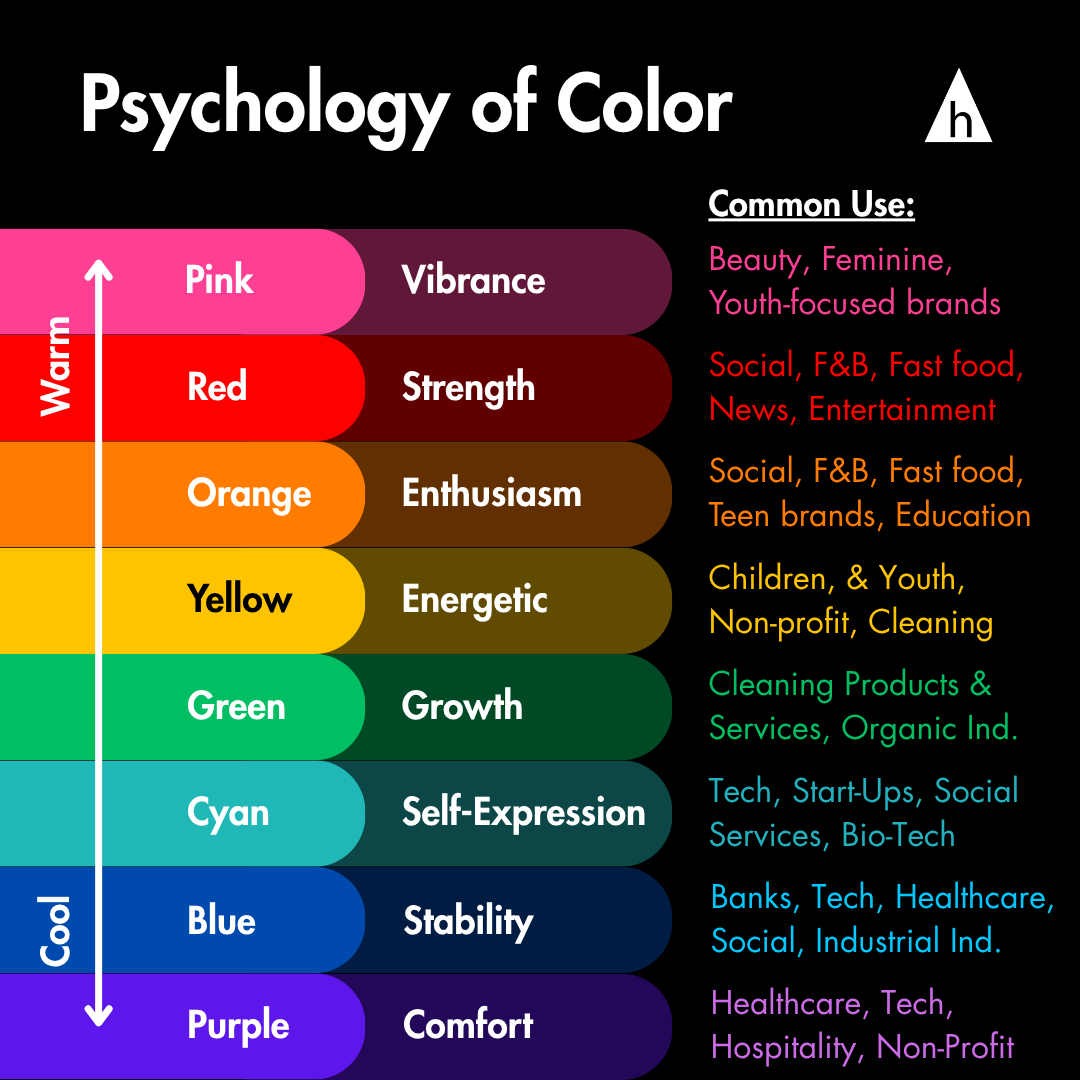
Source: Arthesive.com
But designers don’t just stop with color theory; they look at composition. How their design is going to flow well, from a user's perspective. Scale, hierarchy, negative space, direction, contrast, repetition, and balance are the key elements they tend to follow throughout their design process. The same process is applied to the typography. However, the key factor is selecting which art movements to use, like minimalism, surrealism, etc., that will significantly influence UI/UX and product design, ultimately distinguishing the final product from the masses.
When we turn to product design, they tend to draw their inspiration from illustration styles. The end goal is to appeal to the consumer through a stylistic brand identity that features geometric designs, vibrant pop art, and some vintage styles. Take Andy Warhol’s pop art, for example, the use of bright colors and graphic style, which elevated everyday items as an indirect nod to mass production and consumerism. His style is widely used as inspiration for the same items people use today, ironic, right? But it’s strategic.
Pop art isn’t the only art movement product designers turn to. Art Deco is widely used for its whimsical, symmetrical patterns, often associated with luxury products. Vintage and rustic illustrations that were used in the 70s and 80s were often hand-drawn, making them feel authentic with a nostalgic mood. Organic food and artisanal beverage companies tend to use this to appeal to their audience. And the minimalist art movement had a huge impact on, not only on product design, but also on graphic design–we see this through very well-designed company logos. We see this more on consumer products mainly because it is an effective way to communicate the product’s essence through subtlety.
Design is essentially applied art with function. So that bright colored notebook with a cool geometric design on the cover that caught your eye…came from an art movement.
The Impact of Art on Fashion
Fashion has been in a long-term relationship with art movements by mirroring them. In fact, the fashion industry is one that time-travels. No matter what era we’re in, fashion will always have some element, current or from the past, embedded in its designs. Some fashion designers collaborate with artists to create avant-garde or ready-to-wear items. We see this today with luxury and mainstream fashion brands. Using art, whether present or from the past, becomes a phenomenon–it’s wearable storytelling.
Let’s take Dolce & Gabbana’s 2025 Rome Alta Saltoria collection, for example. Creative directors Domineco Dolce and Stefano Gabbana paid homage to Italian craftsmanship and ecclesiastical tailoring–heavily influenced by Italy’s vast history with remnants of Renaissance, Baroque, and 1950s art movements. They combined religious iconography with art movements and produced one of the most impactful collections, bridging art and fashion eloquently. There are many ways one could connect with this collection–whether through a religious lens, a historical art perspective, or an appreciation for dramatic individualism. Either way, when you look at the collection, you cannot help but feel transformed.
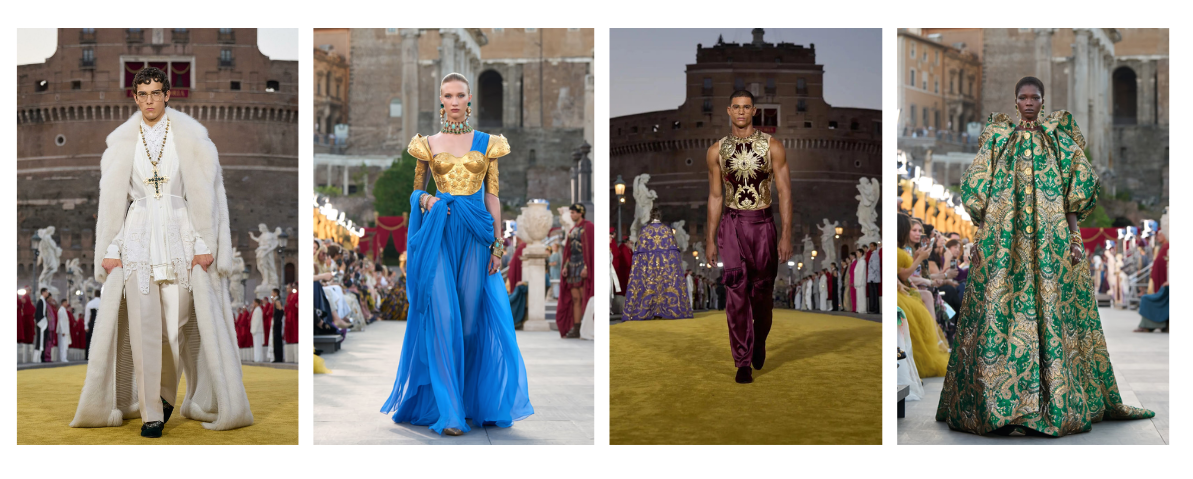
Source: Dolce & Gabbana; Photo credit: Matteo Gebbia /Gorunway.com
Louis Vuitton’s Creative Director Pharrell Williams has pushed the fusion of streetwear and graphic art. For the 2024 Spring collection, Tyler, the Creator hand-drew the iconic ‘craggy monogram’ that was seen on items for the Capsule Collection. But this isn’t his first time. Pharrell has had a 25-year collaboration with Japanese designer NIGO. For the Louis Vuitton Fall-Winter 2025 Men's collection, titled "Remember the Future," NIGO’s workwear was merged with Pharrell’s streetwear through graphics and Japanese-inspired motifs, including NIGO’s handwriting on key pieces. See the pattern here? 😉
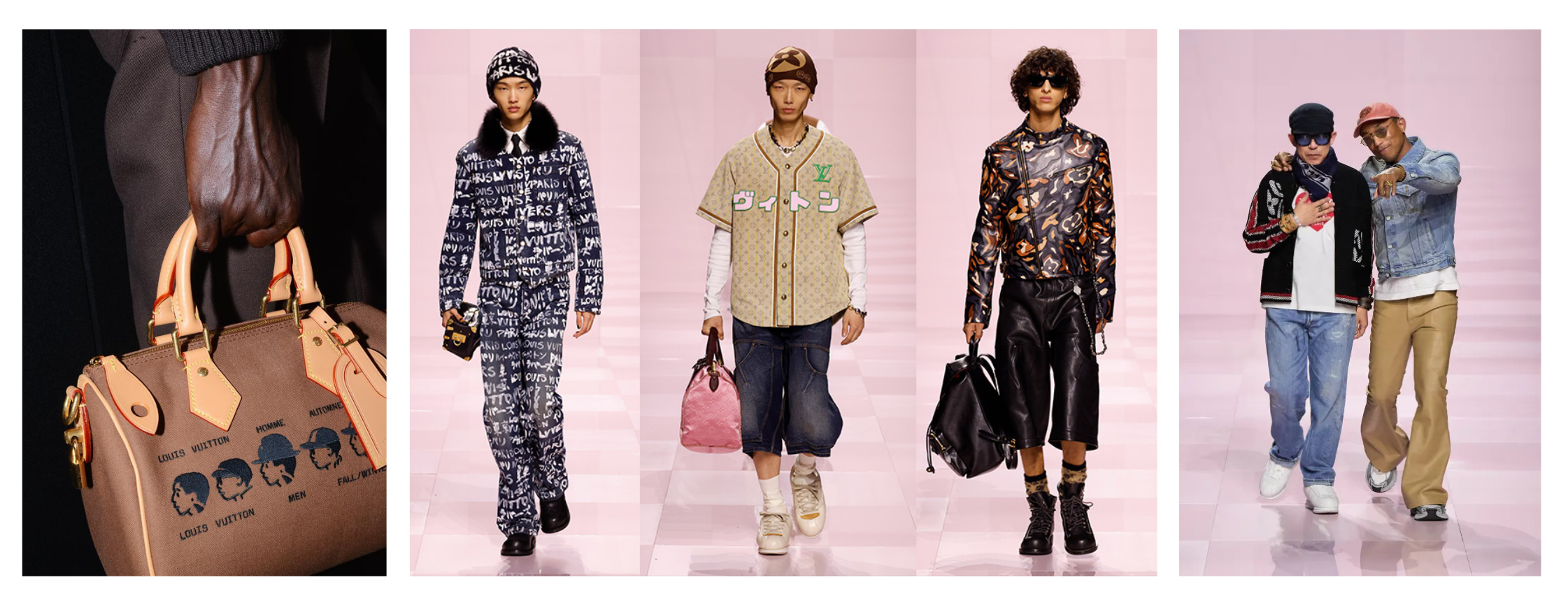
Source: Louis Vuitton; Metro Society
Art has consistently influenced trends in fashion. Prints, textures, and color palettes are largely fueled by the desire for emotional connections, individual expression, and tactile experiences. These trends act as the visual language the fashion industry relies on, transforming art into identity and cultural expression, which in turn has a direct impact on the market.
The Impact of Art on Business and Branding
Art has also been the driving force behind business and branding. It uses a commercial angle to capture its audience. For a business to thrive, it must first build its brand. Most companies will hire a designer or have an internal design team to help establish this. Branding heavily relies on three artistic principles: logos, visual identity, and packaging. And if a business or company skips this part, then failure will ultimately loom–connecting with your audience is highly significant to succeed.
Without thinking twice, designers will turn to art during development, as it directly influences every aspect of their work–from logo design to the colors used throughout that shape the overarching theme. Much like in fashion, art establishes an emotional connection, conveys value, and weaves a narrative that captivates people’s attention.
Art in Marketing
Art heavily influences marketing. When it comes to luring prospects, marketing is the worm cast out in the consumerist's pond. It uses creativity to appeal to the market in order to catch the desired fish (i.e., you, the buyer). Nike’s “Air Max Graffiti Stores” is one genius example.
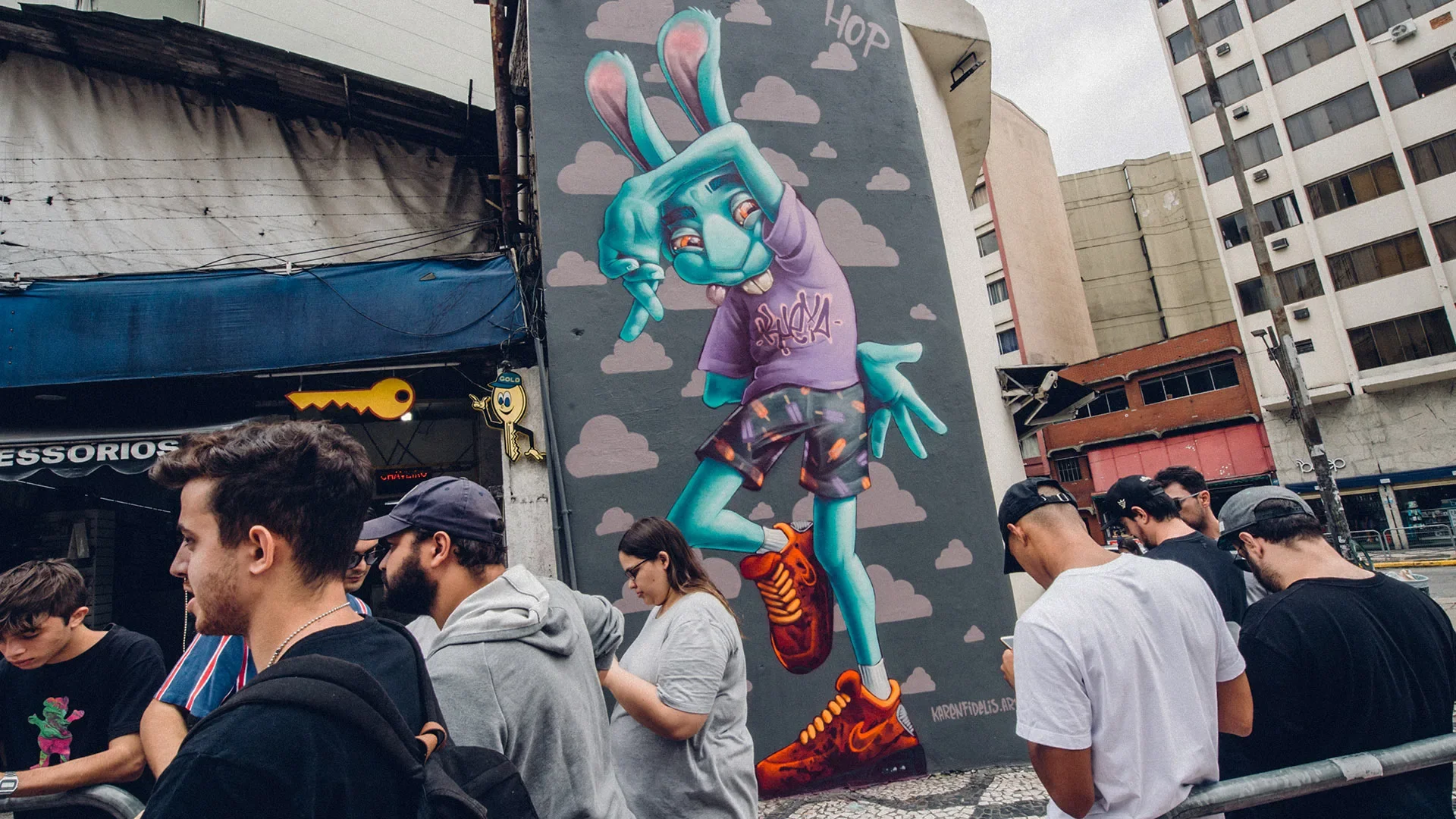
Source: https://www.akqa.com/work/nike/air-max-graffiti-stores
In 2019, Nike wanted to leverage the Air Max drops to increase relevance and revenue in São Paulo, Brazil. Air Max had been part of the street art culture in São Paulo, and at the time, the governor was waging war on the community by erasing most of it. Nike saw an opportunity. And went like this: most of the graffiti had feet on its characters, and since São Paulo was the graffiti capital of the world, they invited the artists to update their graffiti by adding Air Max on their characters. By participating in a limited pre-sale of the new shoe, the customer had to visit each of the walls and access Nike’s site in order to unlock the purchase through geolocation. This turned the city walls into Nike stores, bridging cultural experience through a trending art movement. This project impacted more than 80M people on social media and increased Nike’s site traffic by more than 22%. By far the most clever way to help bridge the art community and politics through consumerism.
Art in Consumer Psychology
If art is the worm in the consumer’s pond, then the hook is the psychological tool to help capture the prey. It leverages visual aesthetics to attract the consumer through emotions, influencing purchasing behavior that elevates brand perception.
Let’s look at color psychology. Color and visual cues influence the consumer’s perception, appetite, and mood. Similar to design, using certain colors is a strategy, and artists know this. Educated artists learn this as part of a mandatory curriculum, but for self-taught artists, it comes naturally. Certain artistic techniques can impact a body of work. Let’s take blue, for instance–it is centered on calm, trust, and stability, and is considered the most soothing color, associated with lowering blood pressure and reducing anxiety. It’s no wonder that we see this color being used often in branding and marketing materials. Banks and tech companies widely use this color to convey a professional, dependable message to their audience to gain their trust and become a potential client. It’s not because they love the color; it’s because of the psychological strategy behind using it.
But there are cons to using blue. It also represents sadness and coldness. By negatively using this color, it can evoke emotional distance or coldness. We see this used effectively during Picasso’s Blue Period from 1901 to 1904. He used this color to visually express his grief from the death of his closest friend, Carles Casagemas. And while these paintings now go for millions of dollars at auction today, they were considered widely unpopular and were difficult to sell when Picasso first created them.
From businesses to consumers, art is the starting point. It's a strategic and clever way to unlock the key to a target audience’s desires through the use of art to shape perception and drive profit.
Why This Matters for Artists and Creatives
Art is not only for galleries, museums, or global fairs; it is the very essence of driving the market. Think of it as the blood that supplies the heart–every industry, from every corner, relies on it for its source of nutrition. And there’s no shortage of finding traces of it.
What people neglect to see is that art directly impacts society–it shapes the culture and community from which it arises. In cultural identity, art captures a community’s beliefs, traditions, and experiences through visual storytelling. Think of all the public art installations you’ve seen recently; graffiti and large murals can show you a community’s soul.
Art is also the catalyst for social change–it can fuel social activism. With today's global climate, we see this movement become more relevant. Our social media is flooded with artists creating with a specific purpose. It helps give a voice to the marginalized and shine light on sensitive conversations we see being suppressed in real time. By engaging the audience on an emotional level, art can promote empathy and drive action, and we need this now more than ever.
Art has a significant influence on the economy. Museums, galleries, and art fairs draw in tourists, which generates revenue and, in turn, creates more jobs. Even the commercial art market is another example of an economic driver. In 2023, one study showed that it directly contributed $1.17 trillion to the U.S. economy. And investing in art has always been a favored strategy for managing wealth. The affluent class often includes art investments in their portfolios, acknowledging its potential for long-term value appreciation.
Art has healing qualities. Therapy and mental health awareness have been on the rise these past couple of years. It is no longer looked at as taboo; society has encouraged it. And art has recently gained recognition for its mental health benefits. It provides a non-verbal outlet to help process emotions and trauma creatively. An increase in art therapists has emerged, and color therapy books for adults have surged on the internet, aiming to combat stress. (Hint: graphic designers designed these!)
Being an artist is not something one should be ashamed of or regard as a mere whimsical hobby–it’s far more impactful than you may realize. Art continues to be a vital foundation of human experience. As we (artists) continue to adapt to an evolving world, the existence and impact of art serve as a reminder of our collective humanity and the potential of creative expression.
Future Trends: Where Art and Industry Are Heading
As we sprint towards the future at an unprecedented pace, the realm of art will inevitably undergo a transmogrification–and I’m here for it! We will see digital art strengthen, more AI tools for artists, and unique brand experiences.
Digital Art
Digital art began to emerge in the 1960s with the first exhibitions of computer art in Germany. In the 70s, universities began to integrate computers into fine art programs and certain curricula. Andy Warhol pushed this movement forward in the 80s using an Amiga in 1985, and hit mainstream with the birth of the World Wide Web. From there, digital art is considered fully integrated into contemporary art, and now it’s embedded into our society.
It has since further evolved into 3-dimensional spaces, encompassing NFTs and the metaverse. Today, galleries are embracing a hybrid model, using both brick-and-mortar and digital environments to showcase digital art–cementing into the art realm.
AI-assisted creativity
AI has now infused into every industry, but the hype has now plateaued. We’re now leaning on this more than we realize–from everyday use, logistics, cars, and more. AI tools are becoming popular amongst artists. Some experiment with the technology, and others have intentionally used it within their concepts. We see it being used in futuristic 3-dimensional art, which has gained popularity amongst younger collectors. Platforms like Midjourney, Leonardo.ai, and Luma AI are some of the tools artists are using to help with their creative processes. And as the technology advances, the likelihood is that we’ll see more artists lean on this in some capacity.
Immersive brand experiences
Art is shifting from just being a decorative element of a brand identity to being the core. Businesses are moving into immersive brand experiences to foster deeper connections through multi-sensory environments. This means combining current technology with art. For instance, Perrier-Jouët used their "Cohabitare" at Design Miami in 2025 to create an environmental dialogue with sustainable, touch-responsive sculptures, which aligns with this year’s art trends (see our art trends for 2026 blog). In 2024, Absolut vodka partnered with The Andy Warhol Foundation for the Visual Arts, designed to bridge the past with the present. Absolut created a campaign of limited-edition bottles featuring a lost blue painting by Andy Warhol from 1985 that was rediscovered in 2020. On the back of the bottles was a QR code that offered an in-depth experience behind the collaboration to consumers, which also offered cocktail recipes inspired by Warhol’s taste. A full-circle experience fueled by art!
As the art world moves forward, the lines between artist and entrepreneur are blurring. The art siloes are breaking down and merging into consumerism, and before all the art snobs get all flustered, this isn’t necessarily bad. What it does mirror is the societal starvation of a new type of connection; an authentic experience, if you will. And what better way to do this than through art?
Bottom line
When it comes to connecting with a specific audience, art plays a crucial role in shaping how industries present themselves; how to look, feel, and communicate. It touches every aspect of the business, from brand development, packaging, and marketing–it’s the universal driver of innovation. And the most successful industries don’t just use art–they depend on it.
For more art insights, education, and trends, be sure to follow us on Instagram. Visit our blog page for more creative reads!